
Answers
Dumpster Rental FAQ Chesapeake VA
Everything people ask us before booking — sizing, pricing, what can and cannot go in a container, driveway protection, permits and the Virginia disposal rules. Still stuck? Ring the yard.
- Licensed & insured
- Same-day delivery
- Flat-rate pricing
- Locally owned
Section 1
Booking & delivery
How do I book a dumpster in Chesapeake?
Call (757) 432-2979. There are no forms on this site by design — a two-minute conversation settles the size, the placement and the timing far better than a web form and a callback. Have the address, a rough description of the material, the spot you want it, and your dates.
How quickly can you deliver?
Most orders placed before noon go out the same day inside Chesapeake and the nearer South Hampton Roads towns; anything booked in the afternoon usually lands first thing the next morning. Jobsite swap-outs take priority because a full container stops a crew working.
Do I need to be there for the delivery?
No, as long as we know exactly where it goes and the spot is clear. Plenty of customers text a photo of the driveway with an X on it. If the placement is tight, on a slope, or near a septic lid or irrigation line, it is worth being there for the two minutes it takes to set.
How long can I keep it?
The standard rental period covers most jobs comfortably, and extending is cheap and takes one call. If you finish early, ring us and we will collect sooner so you get your driveway back.
Can I get the container swapped mid-job?
Yes. A swap drops an empty container and takes the full one in the same visit. On a live jobsite, tell us your expected fill rate at the start and we will schedule swaps in advance rather than waiting for the call.
Section 2
Sizes & capacity
What size dumpster do I need?
It depends far more on what you are throwing away than on the size of the job. Light bulky material fills volume first, so go one size up. Dense material — concrete, shingles, plaster, tile, soil — hits the weight allowance while the box still looks half empty, so go smaller. Describe the pile and we will size it.
What sizes do you carry?
Ten, fifteen, twenty, thirty and forty yard roll-offs. The 10 is the purpose-built heavy-debris box, the 15 and 20 cover most residential work, the 30 handles renovations and estate clearances, and the 40 is for high-volume light commercial material.
How much room do I need on the driveway?
Roughly 20 feet of length for a 10 or 15 yard and about 27 feet for a 20, 30 or 40, plus around 10 feet of width for the rear doors to swing. The truck separately needs about 60 feet of straight approach and 23 feet of overhead clearance.
What happens if I go over the weight allowance?
You pay the per-ton rate we quoted you at booking for the excess, and nothing else. There is no penalty or surprise administrative fee on top. If a job looks likely to run heavy we will flag it before the truck leaves.
Section 3
Pricing
How is the price worked out?
One flat rate covering delivery, the rental period, collection, fuel, disposal and a stated tonnage allowance. Four things move it: the size you take, how dense the material is, how long you keep it, and how far you are from our yard.
Are there any hidden fees?
No. The number we quote is the number you pay unless you go over the stated tonnage, in which case you pay the per-ton rate we told you about up front. No fuel surcharges, no environmental fees, no administrative charges appearing on the invoice afterwards.
Is a dumpster cheaper than a junk removal crew?
For anything beyond a couple of items, almost always. Crews charge by volume or truckload, so a job that grows gets expensive fast. A roll-off is one flat price no matter how many trips you make out to it. For two items and no time, a crew is genuinely the better call.
Do you charge extra for a longer rental?
Extra days are charged at a modest daily rate advised when you book. We would far rather extend than have you rush a job or heap the container above the top rail, which makes it illegal to transport.
Section 4
What can go in
What can't go in the dumpster?
No liquids, wet paint, solvents, motor oil, fuel, pesticides or lawn chemicals, batteries, tires, propane cylinders, appliances holding refrigerant, electronics, medical waste, hot ashes or anything containing asbestos. Those are disposal bans, not house rules — one prohibited item can get a whole load rejected.
Can I put yard waste in with general rubbish?
We ask that you keep it separate anyway. Clean yard debris — leaves, grass, brush and branches — is handled as its own stream at the regional transfer station and costs far less than mixed household waste. One bag of household trash mixed in with it can push the whole load into a different price.
What about concrete, brick and dirt?
Those need their own low-fill container. Mixed into a general load they will blow past the weight allowance and can make the whole load unacceptable at a construction and demolition facility. Clean concrete on its own is the cheapest heavy load there is, because it gets crushed and reused.
Can I put a mattress or appliances in?
Mattresses usually yes, but mention them when you book because some facilities surcharge them. Appliances are fine except anything containing refrigerant — fridges, freezers, air conditioners, dehumidifiers — which need certified refrigerant recovery before they can be scrapped. Whole tires are a no; they need their own route rather than the dumpster.
What about paint, chemicals or old motor oil?
Those cannot go in the dumpster at all. The Chesapeake Transfer Station on Hollowell Lane, run by the Southeastern Public Service Authority (SPSA), takes household hazardous waste and used motor oil as their own separate drop-off streams. Call us if you are not sure where something needs to go and we will point you in the right direction.
Section 5
Property & permits
Will the dumpster damage my driveway?
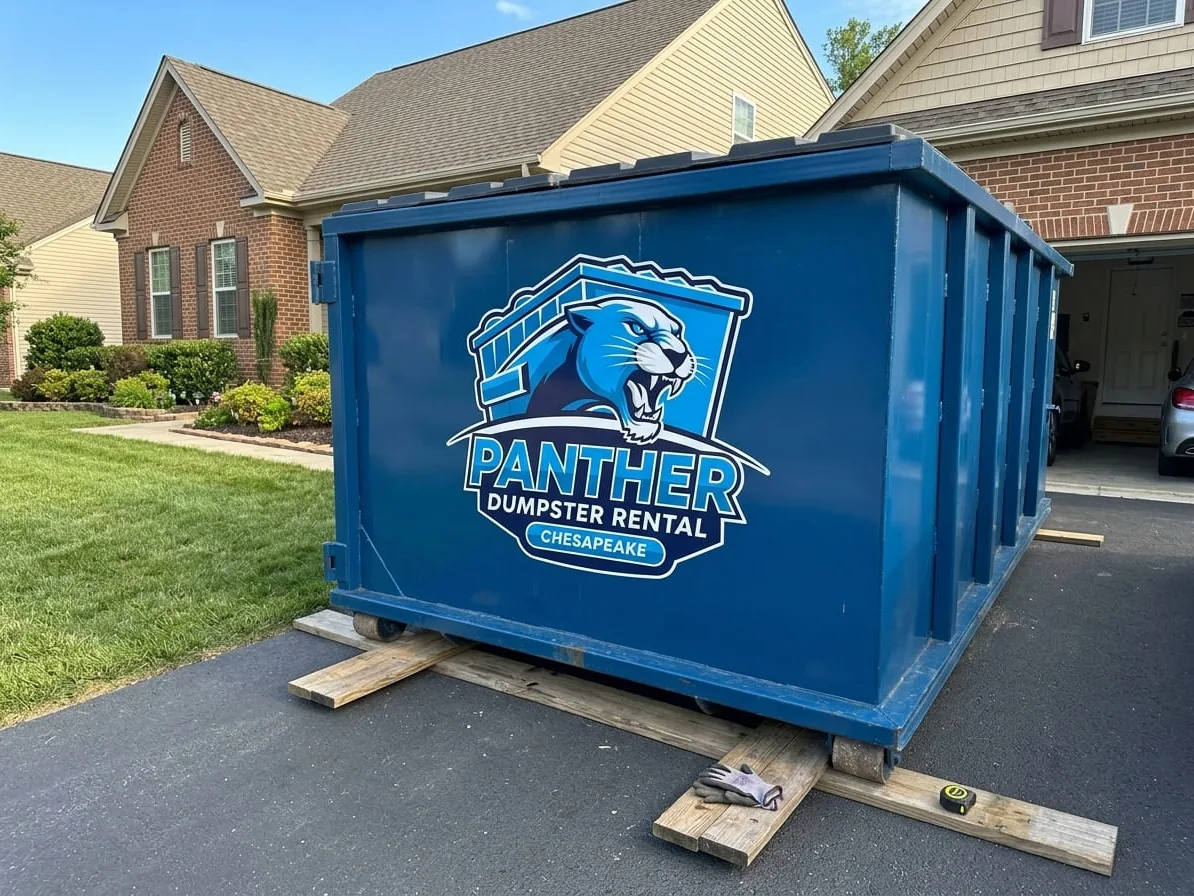
It should not, and we take real steps to prevent it. Boards go under the rails and roller contact points on every driveway placement at no extra charge. Damage almost always happens during the roll-off and pick-up rather than while the container sits, so protection and a careful driver matter most. A drive already cracked or spalling from age, heat or a poor subgrade is at higher risk whatever anyone does.
Do I need a permit?
If the container sits entirely on your own property, no permit is needed. If it has to sit on a public street or sidewalk, you may need a temporary permit from the City of Chesapeake — tell us when you book and we can guide you through the process. HOAs and some neighborhoods have their own rules on top of that, so check if you are in one.
What does Virginia say about tires and other regulated items?
On top of the universal bans — liquids, paint, solvents, fuel, chemicals, batteries, propane, refrigerant appliances, asbestos — Virginia law makes it illegal to store more than 100 waste tires on a property without a permit. Knowingly violating that is a Class 1 misdemeanor, and letting a pile grow past 500 tires escalates to a Class 6 felony. Tires need their own recycling route rather than a dumpster or a backyard pile, and the state takes illegal tire dumping seriously — we can point you to where they need to go.
Do you deliver during hurricane season?
Yes, right through it. Hurricane season here runs roughly June through November, and we keep extra containers staged through the peak months. What we need is the placement spot clear of downed limbs or storm debris before the truck arrives. If a storm is bearing down, call ahead — we would rather get a container to you before the rain starts than after.
Talk to a real person
Question not answered here?
Ring (757) 432-2979 and ask. You will get somebody who has actually loaded a container, not a script.
Mon–Sat 7:00am – 6:00pm · Sun by appointment
Go deeper