
For businesses
Commercial Dumpster Rental Chesapeake VA
Scheduled swaps and standing accounts for shops, restaurants, offices, property managers and light industry across Chesapeake's business parks and the wider South Hampton Roads market.
- Licensed & insured
- Same-day delivery
- Flat-rate pricing
- Locally owned
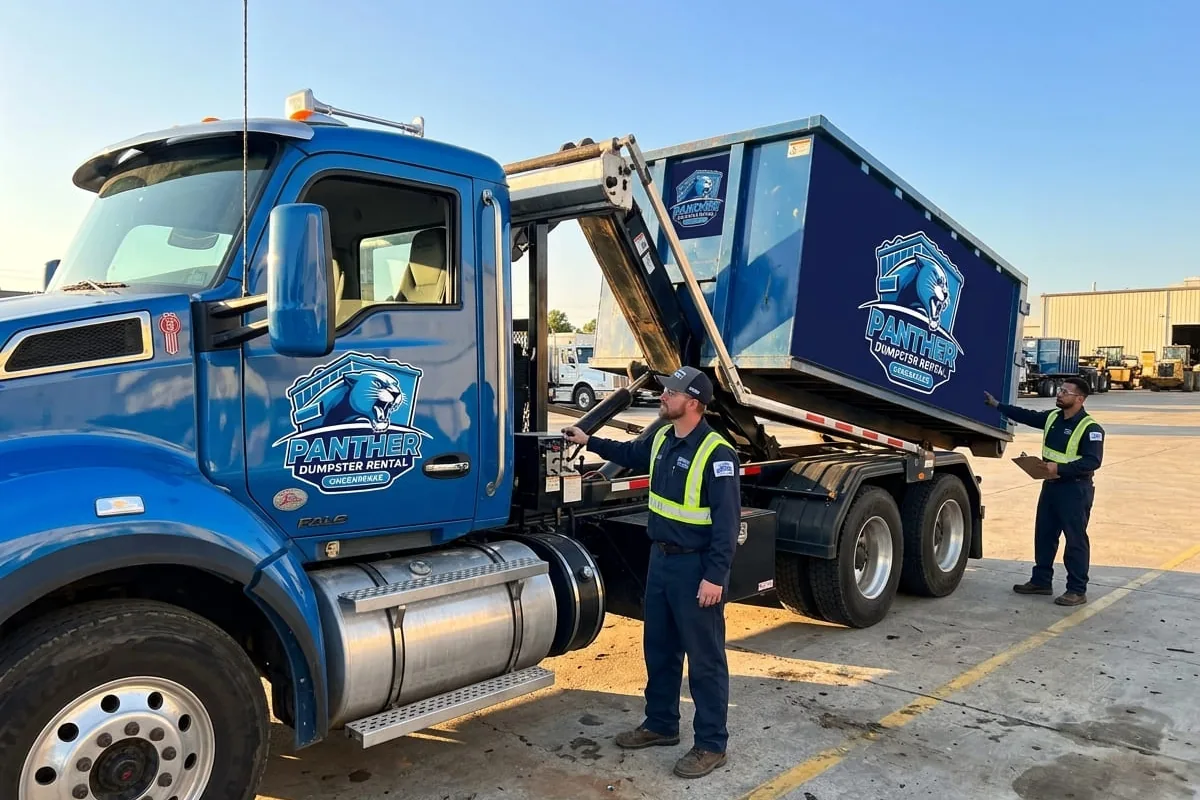
Commercial Dumpster Rental Chesapeake VA across Chesapeake and Portsmouth
Chesapeake's commercial base runs wide — retail plazas along Battlefield Boulevard and Greenbrier Parkway, restaurants and offices scattered through Great Bridge and South Norfolk, distribution and light industrial operations in the business parks off I-464 and Route 168, and property managers running apartment and townhome communities across the whole footprint of a city large enough to include both dense subdivisions and working farmland to the south. A business does not want a dumpster for its own sake. It wants waste handled on a rhythm it stops thinking about.
That is a different product from a one-off residential rental, and we run it differently: an agreed swap schedule, a container sized so it fills without overflowing between visits, and a flat rate with the tonnage allowance stated up front so nothing shows up as a surprise on an invoice. Whether you need one standing container behind a strip retail unit or several across multiple properties, the account is built around your operation rather than a generic template.
Scheduled swaps and standing accounts
A standing account puts the container on a calendar rather than leaving pickup to guesswork. You agree a swap day, we hold it, and if a week runs heavier than usual — a store reset, an inventory clear-out, a busy season — a call gets an extra pickup added without renegotiating the whole arrangement. Most accounts settle into a rhythm within the first month and the business stops thinking about the container at all, which is the point.
- A fixed swap day agreed at setup, with flexibility to add an on-call pickup during a heavy week
- One point of contact for the account rather than a different person each time you call
- Certificates of insurance issued to a landlord or managing agent before the first delivery when a lease requires it
- Pricing structured around your actual volume rather than a one-size container that either overflows or sits half empty
New accounts generally start with a short trial period rather than a locked-in schedule from day one, since the right swap frequency for a business is easier to confirm after seeing a few real weeks of volume than to predict from a single phone conversation. If the first month runs lighter or heavier than expected, that is normal, and adjusting the schedule at that point costs nothing and takes one call.
Access in tight service yards and older commercial strips
A lot of commercial work in Chesapeake is a logistics question before it is a pricing question. Older retail strips near South Norfolk and Deep Creek were not built with roll-off trucks in mind, and a shared loading area behind a plaza on Battlefield Boulevard can have three tenants' delivery trucks competing for the same alley at the same time. Newer business parks off Volvo Parkway and out toward Grassfield generally give a truck more room to work, but a photo of the intended spot before delivery day still saves more back-and-forth than any phone conversation.
Where a yard genuinely cannot take a large container, the answer is usually a smaller box swapped more frequently rather than forcing an oversized one into a space that will not hold it. A 20 yard covers an enormous share of ordinary commercial waste in a footprint most service yards can actually accommodate.
Trash enclosures built into a shopping center or office park present their own version of this problem. Many were designed years before the tenant mix changed to something generating more volume than the enclosure was ever sized for, and a container that has to be winched out past a gate, a fence line or a row of parking bumpers needs the driver to know that before the truck is committed to the approach, not after. A short call describing the enclosure, or a photo sent ahead of the first delivery, generally resolves it in one pass rather than a wasted trip and a rescheduled swap.
Retail, restaurants, offices and property management
Restaurant and retail waste is a different stream from an office fit-out, and both are different again from what a property manager deals with across a portfolio of apartment or townhome buildings. Restaurants generate wet, heavy cardboard and food packaging that needs frequent pickup rather than a large box sitting for weeks. Offices tend toward light, bulky material — furniture, carpet, ceiling tile during a renovation. Property managers often run a mixed program: a standing container at the largest building plus one-off drops for unit turnovers, which we can fold into the same account rather than pricing separately every time.
Light industrial and warehouse operations around the business parks add their own wrinkle: pallets, packaging, and periodically a genuine bulk clear-out. If a project is closer to a renovation or fit-out than routine waste service, our construction container work covers that same footprint.
Chesapeake's commercial calendar also has a seasonal shape worth planning around. Retail tenants tend to generate a genuine spike around the holiday season as packaging volume climbs, restaurants see summer patio seasons push more disposable packaging through the account, and property managers often schedule a wave of unit turnovers in the same late-summer window every year. None of that requires a different service, just a heads-up early enough that we can add capacity to an existing schedule instead of scrambling to fit an unplanned surge into an already-set swap day.
Multi-tenant properties add a coordination layer worth naming directly. Where several businesses share one dumpster pad — common in older strip retail near South Norfolk and Deep Creek — the container is effectively a shared resource, and one tenant's construction debris or an unusually heavy week can crowd out everyone else's normal volume. A property manager billing that container back to multiple tenants benefits from knowing who is actually driving the usage, and we can help flag when a shared container's pattern looks like it needs a second box or a tighter swap schedule rather than assuming it is simply undersized.
Recycling, scrap value and what actually changes the bill
Commercial waste streams often have more recycling value hiding in them than people assume, and separating it out is one of the few things a business can do that actually lowers its own disposal cost rather than just shifting it around. Retail operations that break down cardboard consistently use meaningfully less container space than ones that toss boxes in whole, which either stretches out the swap schedule or lets you run a smaller container for the same volume. Light industrial and warehouse operations around the business parks near Volvo Parkway and Route 168 often generate genuine scrap metal — packaging strapping, old racking, damaged pallets with metal fasteners — and keeping that in its own pile rather than the general container is worth asking us about specifically.
What actually changes a commercial account's bill month to month is rarely the base rate. It is volume creeping past what the container and schedule were built for, or a genuinely mixed load that includes something that should have gone a different way — a contractor's construction debris getting tossed in a retail tenant's general container during a build-out next door, for instance. Flagging changes in your operation early, whether that is a new department generating more waste or a seasonal spike around the holidays, lets us adjust the account proactively instead of you discovering the mismatch on an invoice.
- Break down cardboard and packaging consistently — it is the single biggest space saver for retail and restaurant accounts
- Ask about a separate scrap metal stream if your operation generates it regularly
- Flag seasonal volume spikes ahead of time rather than after the container starts overflowing
- Keep construction or renovation debris out of a standing commercial container — that needs its own container instead
Which size suits the job
Commercial accounts split roughly by density. Light, bulky waste — cardboard, packaging, office furniture, retail fixtures — favors a bigger box, typically a 20 or 30 yard, because volume runs out before weight does. Denser commercial debris, like a kitchen renovation's tile and cabinetry or a warehouse clearing out old shelving, hits its weight allowance sooner and does better in a 10 or 15 yard that gets swapped more often than it sits full.
- Size for your busiest week, not your average one, so the container does not overflow between scheduled swaps
- Flatten cardboard rather than tossing boxes in whole — it is the single biggest space saver for retail and restaurant accounts
- Keep metal and scrap separated from general waste where your operation produces it; it often has recycling value worth capturing
- Confirm the swap-day cadence matches your actual volume before locking in a size — it is easier to adjust frequency than to keep resizing the container
- Ask about a second container for a specific department or phase rather than overloading one box meant for general waste
Sizes
Which container for commercial dumpster rental?
Every service runs in all four sizes. Match the material to the weight allowance and the rest takes care of itself.
| Size | Dimensions | Capacity | Weight included | Best for |
|---|---|---|---|---|
| 10 Yard Dumpster | 12 ft long × 8 ft wide × 3.5 ft high | about 3 pickup truck loads | 1–2 tons | Small bathroom remodels, single-room cleanouts, concrete and heavy debris, roofing up to about 15 squares. |
| 15 Yard Dumpster | 16 ft long × 8 ft wide × 4 ft high | about 4–5 pickup truck loads | 2–3 tons | Attic and garage cleanouts, kitchen remodels, medium roof tear-offs, small deck removals. |
| 20 Yard Dumpster | 22 ft long × 7.5 ft wide × 4.5 ft high | about 6 pickup truck loads | 3–4 tons | Whole-home decluttering, flooring and siding jobs, large tear-offs, drywall and mud phases. |
| 30 Yard Dumpster | 22 ft long × 8 ft wide × 6 ft high | about 9 pickup truck loads | 4–5 tons | Full-house renovations, new construction, estate clearances, commercial fit-outs and demolition. |
| 40 Yard Dumpster | 22 ft long × 8 ft wide × 8 ft high | about 12 pickup truck loads | 5–6 tons | Large commercial fit-outs, industrial clear-outs, major renovations and high-volume light debris. |
Talk to a real person
Need commercial dumpster rental in Chesapeake?
Call (757) 432-2979 and describe the job. You will get a flat price and a delivery time on the same call — most orders before noon go out the same day.
Mon–Sat 7:00am – 6:00pm · Sun by appointment
Answers
Commercial Dumpster Rental — your questions
Can you provide a certificate of insurance for our landlord?
Yes, and we would rather get that done before the first delivery than chase it down afterward. Send us the certificate holder details and any additional-insured language your lease requires when you set the account up, and we will have it issued ahead of the first drop.
Do we have to sign a long-term contract?
No. A standing account with us is a schedule, not a lock-in. You agree a swap day, we hold it, and if your volume or frequency needs change, we adjust the account rather than holding you to a term. If you only need a container for a single project, that is a phone call and nothing more.
Our loading area is tight. Will your truck fit?
Send us a photo of the spot before you book and we will tell you honestly. Roll-off trucks need a fairly straight approach and enough overhead clearance to tilt the bed, which rules out some covered docks and low awnings on the older commercial strips. Where a yard genuinely cannot take a large container, a smaller box swapped more often is usually the better fix.
Can you service outside our normal business hours?
Often, yes. Early morning before opening is the most common arrangement for restaurants and retail, since the lot or alley is clear and nothing is blocking the pull line. Tell us the window that works for your operation and we will build the route around it where we can.
What happens if our container runs over the tonnage allowance?
You are told the allowance and how overage is handled at the time you book, so it is never a surprise on an invoice. If a container is consistently running heavy, that is usually a sign the account needs a different size or a tighter swap schedule, and we would rather adjust that than keep billing overage month after month.
Service area
Commercial Dumpster Rental across South Hampton Roads
We run roll-off dumpsters out of our 2324 Chesapeake Square Ring Rd yard across every corner of Chesapeake — from Great Bridge and Greenbrier out to Deep Creek, Western Branch and South Norfolk, down to Hickory and Grassfield near the North Carolina line, and across the city lines into Portsmouth, Suffolk and Virginia Beach. If your neighborhood is not on this list, call us anyway. We probably still get there.