
Clear it at your pace
Junk Removal Chesapeake VA
A flat-rate container on your property for the whole job, loaded on your own schedule, instead of a crew charging by the truckload while you decide what actually needs to go.
- Licensed & insured
- Same-day delivery
- Flat-rate pricing
- Locally owned
Junk Removal Chesapeake VA across Chesapeake and Portsmouth
There are two ways to get junk off a property, and they suit different jobs. A removal crew shows up, carries everything out and bills by the truckload — a reasonable choice when there are one or two heavy items and nobody around able to lift them. A container sits on your property for days and costs one flat price no matter how many trips it takes to fill it. The second one wins the moment the job involves any real sorting, which most junk removal jobs do.
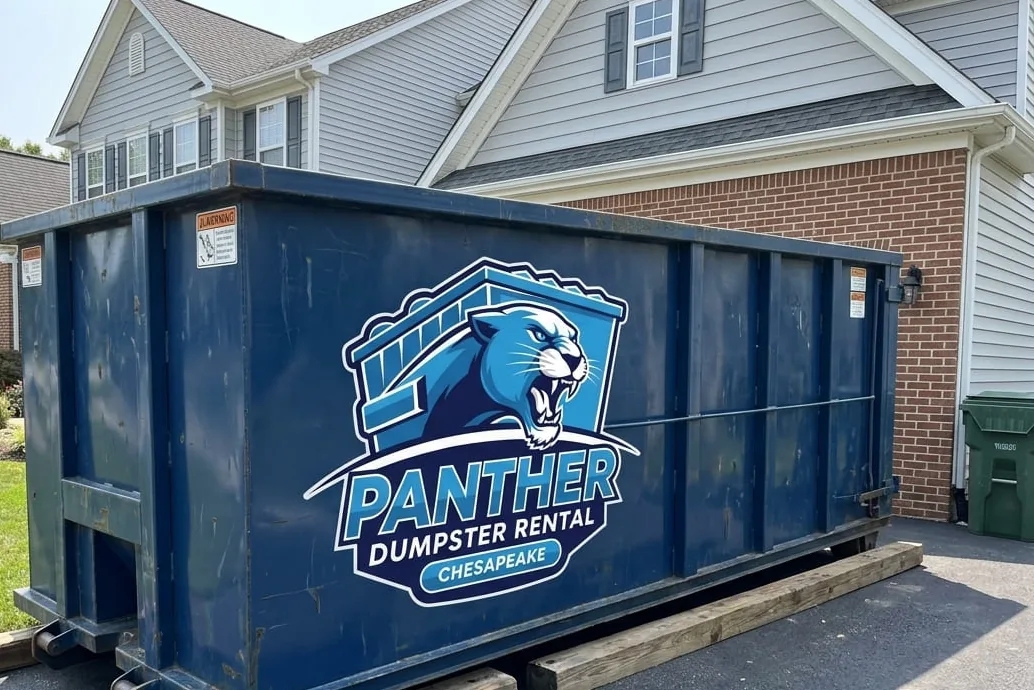
Clearing a garage, an attic, or a shed full of years of accumulation is not really a lifting problem — it is a decision problem. What gets kept, what gets sold, what finally goes. Nobody makes those calls well with a crew standing in the doorway on an hourly rate. We drop the container, put boards under the rails, and come back when you tell us it is ready.
Container versus crew — the honest comparison
We will say the less profitable thing here. If you have one or two items and no way to move them yourselves, hire a removal crew — paying for a container to haul away a treadmill and a couch is poor value and we would rather tell you that upfront than take the order. A container starts winning clearly once the job needs more than an afternoon and more than one room.
Where it wins, it wins decisively. Per-truckload pricing punishes you for volume you cannot estimate in advance, which is exactly the situation with a garage or attic you have not fully sorted through yet. A flat rate with a stated tonnage allowance does the opposite: the price is fixed on the phone, and the only variable left is how long you take to fill it.
There is a middle case worth naming honestly, too: a job with a handful of heavy pieces and a fair amount of lighter clutter mixed in together, which describes a lot of real garages. In that situation a container usually still wins, since the light clutter alone would push a per-truckload quote up quickly, but it is worth telling us about the heavy pieces specifically — an old cast-iron tub, a stack of pavers, a dead riding mower — so the size and the tonnage conversation accounts for them rather than assuming everything in the pile is as light as cardboard and clothing.
Timeline is the other factor worth weighing honestly alongside cost. A crew can clear a house in an afternoon if speed matters more than anything else, while a container gives you days to work through a property at your own pace. Neither is universally better — a family juggling work schedules around a weekend project usually values the container's flexibility, while someone facing a hard deadline the same week may find a crew's speed worth the higher per-truckload cost even on a job that would otherwise favor a container.
Garages, attics and sheds — the Chesapeake pattern
The same pattern shows up across the city, whether the home is an older place near South Norfolk or a newer build out toward Hickory and Grassfield. The garage has become the default storage room. The attic holds decorations, luggage and boxes of paperwork nobody has opened in years. The shed at the back of the lot has a broken mower, some lumber offcuts and a stack of pavers nobody remembers buying. It is bulky, it is light, and it fills a container faster than the weight suggests.
Work heavy items in first while the container is empty and still easy to walk into, then fill the gaps with bags and boxes rather than the other way around. If the property has a crawlspace being cleared as part of the job, treat it as its own smaller task — items that sat close to a high water table for years often come out more fragile and heavier than they look.
What has to go a different way
A few things that turn up in a typical junk removal job cannot go in with the rest. Hazardous items — paint, solvents, propane cylinders, car batteries, motor oil — need to go through the Chesapeake Transfer Station's dedicated household hazardous waste and used-motor-oil drop-off points at 901 Hollowell Lane rather than into a general container.
Old tires deserve their own mention. Virginia law caps how many tires can accumulate on a property without a permit — more than 100 is a misdemeanor, and the threshold climbs to a felony at 500 or more under Code of Virginia § 10.1-1418.2. Most residential junk removal jobs involve a handful of tires at most, but it is worth routing them separately regardless, since a general container is not set up to handle them.
Electronics deserve a similar mention, since they turn up in nearly every junk removal job in some form — an old television, a tower computer, a stack of chargers and cables nobody can identify anymore. Most electronics are not hazardous in the way paint or fuel is, but many recyclers prefer them kept separate from general debris so components can be recovered rather than crushed along with everything else. If a job includes a genuine pile of old electronics rather than just one or two items, mention it when you book so we can point you toward the right drop-off rather than having it ride along in the container by default.
Donating, selling and what's worth pulling out before the container fills
Not everything that comes out of a garage or attic needs to go in the container. Furniture in decent shape, working small appliances, tools, and building materials left over from a past project often have real resale or donation value that gets lost the moment they go over the rail. Setting aside a "maybe" pile before the container work starts — even just a corner of the driveway — gives you room to make that call without holding up the rest of the job.
Local donation centers and consignment options across Chesapeake and the wider South Hampton Roads area take furniture, tools, and household goods in usable condition, and a Saturday morning drop-off before the container gets loaded is often worth more than the small amount of space those items would have taken up anyway. This matters most on bigger jobs — a full garage or a multi-room declutter — where the volume of genuinely reusable material tends to be higher than people expect once they actually start sorting room by room.
- Set aside a donation or sale pile before loading starts, not partway through
- Working appliances and furniture in decent shape are usually worth a donation trip rather than the dumpster
- Leftover building materials from past projects often have resale value through local reuse stores
- Do the sorting decision once, upfront, rather than pulling items back out of a loaded container later
Which size suits the job
Junk removal debris is almost always bulky and light, so size by volume first. A 10 yard suits a single room or a genuinely small load. A 15 or 20 yard covers most garage, attic and shed clear-outs, and a full house's worth of accumulated junk. Step up to a 30 only when furniture from multiple rooms is moving all at once, such as a full property clear-out ahead of a sale or move.
Rental turnovers and move-out cleanouts are a common version of this job that deserve a specific mention, since landlords and property managers across Chesapeake often face a tight window between a tenant leaving and a new one moving in. A 15 or 20 yard sized for the unit rather than the whole building usually covers a single-unit turnover comfortably, and because the timeline is often compressed, pairing this with same-day delivery when the schedule allows for it is common and something we plan for regularly.
- Break furniture down where possible — it packs flatter and leaves more usable room
- Load heavy, dense items first and low, then fill in with lighter bulky material above
- Stage hazardous items and tires separately from day one rather than pulling them back out later
- Describe the rooms or areas being cleared on the phone rather than guessing at a yardage
- Order slightly larger than your best guess if the space has not been fully sorted through yet — running out of room mid-job costs more than a size step-up would have
Sizes
Which container for junk removal dumpsters?
Every service runs in all four sizes. Match the material to the weight allowance and the rest takes care of itself.
| Size | Dimensions | Capacity | Weight included | Best for |
|---|---|---|---|---|
| 10 Yard Dumpster | 12 ft long × 8 ft wide × 3.5 ft high | about 3 pickup truck loads | 1–2 tons | Small bathroom remodels, single-room cleanouts, concrete and heavy debris, roofing up to about 15 squares. |
| 15 Yard Dumpster | 16 ft long × 8 ft wide × 4 ft high | about 4–5 pickup truck loads | 2–3 tons | Attic and garage cleanouts, kitchen remodels, medium roof tear-offs, small deck removals. |
| 20 Yard Dumpster | 22 ft long × 7.5 ft wide × 4.5 ft high | about 6 pickup truck loads | 3–4 tons | Whole-home decluttering, flooring and siding jobs, large tear-offs, drywall and mud phases. |
| 30 Yard Dumpster | 22 ft long × 8 ft wide × 6 ft high | about 9 pickup truck loads | 4–5 tons | Full-house renovations, new construction, estate clearances, commercial fit-outs and demolition. |
| 40 Yard Dumpster | 22 ft long × 8 ft wide × 8 ft high | about 12 pickup truck loads | 5–6 tons | Large commercial fit-outs, industrial clear-outs, major renovations and high-volume light debris. |
Talk to a real person
Need junk removal dumpsters in Chesapeake?
Call (757) 432-2979 and describe the job. You will get a flat price and a delivery time on the same call — most orders before noon go out the same day.
Mon–Sat 7:00am – 6:00pm · Sun by appointment
Answers
Junk Removal Dumpsters — your questions
Do you load the dumpster for me?
No, and that is really the point of the service. You get the container for the rental period and load it yourself at whatever pace works, which is why the price is flat rather than charged by the truckload. If you need the actual lifting done, a removal crew is the better fit for a couple of heavy items. For anything that needs sorting, the container wins easily.
Is a dumpster cheaper than hiring a junk removal crew?
For a real clear-out, usually yes, because per-truckload pricing charges for volume you cannot estimate ahead of time, and a garage or attic almost always holds more than it looks like from the doorway. For one or two items with no ability to lift them, a crew is genuinely better value, and we will tell you so rather than talk you into a container.
What can't I put in a junk removal container?
Hazardous material of any kind — paint, solvents, fuel, propane cylinders, batteries and motor oil — needs to go through the Chesapeake Transfer Station's household hazardous waste or used-motor-oil drop-off instead of the general container. Old tires should also be kept out and routed separately.
How long do I get to fill the container?
The standard rental period covers most weekend and week-long clear-outs comfortably, and we extend it without hassle if the job runs longer than expected. That flexibility is a big part of why people choose a container over an hourly crew for this kind of work.
Can I put an old refrigerator or washing machine in it?
Tell us ahead of time rather than just loading it in. Appliances are heavy, and depending on the unit there may be refrigerant that needs to be recovered properly before disposal. Mention what appliances are part of the job when you book and we will make sure the container and the plan account for them.
Service area
Junk Removal Dumpsters across South Hampton Roads
We run roll-off dumpsters out of our 2324 Chesapeake Square Ring Rd yard across every corner of Chesapeake — from Great Bridge and Greenbrier out to Deep Creek, Western Branch and South Norfolk, down to Hickory and Grassfield near the North Carolina line, and across the city lines into Portsmouth, Suffolk and Virginia Beach. If your neighborhood is not on this list, call us anyway. We probably still get there.