
For jobsites
Construction Dumpster Rental Chesapeake VA
Containers sized to the phase you are in — demo, framing, finish — and swapped fast enough to keep a crew moving through Chesapeake's building season and hurricane calendar alike.
- Licensed & insured
- Same-day delivery
- Flat-rate pricing
- Locally owned
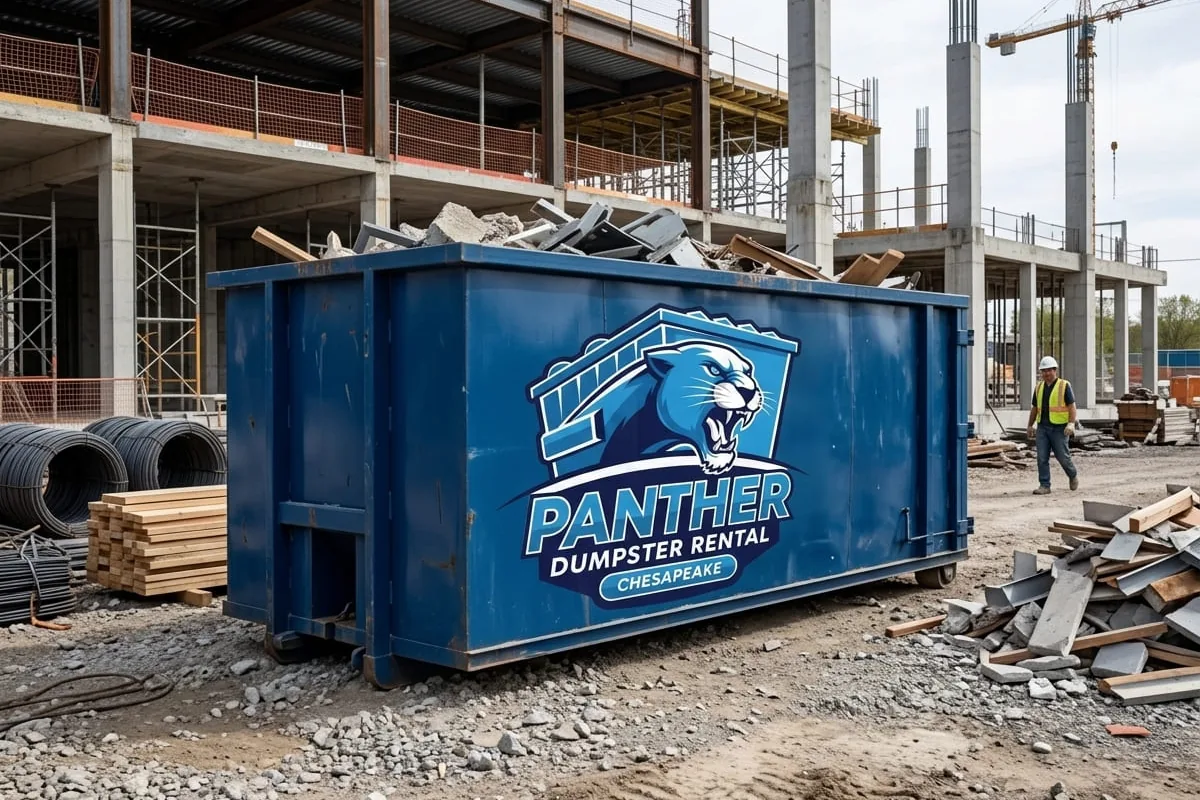
Construction Dumpster Rental Chesapeake VA across Chesapeake and Portsmouth
Sizing one container for a whole build is the single most expensive mistake we see on Chesapeake jobsites. A demolition phase and a finish-out phase produce completely different debris at completely different densities, and no one box handles both well. We size by phase instead: demo goes small and heavy, framing goes big and light, finish goes mixed and unpredictable. Plan the sequence with us at the start of the job and you will run fewer containers overall, not more.
Chesapeake's building season also has a hard stop built into it that a lot of contractors from other regions do not plan around: hurricane season runs roughly June through November, and a tropical system or even a heavy summer thunderstorm can shut down a jobsite and its container access with almost no warning. New construction is common here too, from infill lots in the older boroughs to new subdivisions pushing south toward Grassfield and Hickory, and each stage of a new build has its own debris profile just like a renovation does.
Size by phase, not by the whole job
Here is the rough shape of it on a typical residential build or commercial fit-out in this market. Treat these as starting points and adjust for how much of the structure the crew is actually touching.
- Demolition and strip-out — heavy, dense debris. A 15 or 20 yard filled to a marked line, with a dedicated heavy container for masonry and concrete
- Framing and sheathing — bulky offcuts and packaging with very little weight. This is where a 30 yard earns its keep
- Roofing tear-off — dense again, and it needs its own sizing logic; see our roofing container guidance
- Finish and punch-list — cardboard, packaging, offcuts, the mixed waste of a handover. Mid-size, and the phase people most often forget to budget a container for
Beyond framing and finish, a lot of Chesapeake projects add a phase most schedules do not account for at all: sitework. Grading, footing excavation and a driveway or patio pour before or during construction produce dirt, broken concrete and sometimes old asphalt, none of which belongs mixed in with framing offcuts or drywall scrap. Building a dedicated heavy container into the schedule for that phase, even briefly, keeps the general construction container from absorbing weight it was never sized for.
Weather is a real scheduling variable on a Chesapeake build, not just an inconvenience to work around. A tropical system tracking up the coast can mean a container needs to be pulled or secured ahead of high winds, and a run of heavy summer thunderstorms can turn an open container into a rainwater collector that adds real weight if it sits uncovered for a stretch. Tarping an open container during an active storm pattern, or timing a pull to happen before rather than after a forecasted system, is worth building into the schedule on any multi-week project running through the June-to-November window.
Keeping heavy debris out of the general load
Concrete, brick, block and asphalt are dense enough that they need their own container with a marked fill line rather than riding along with framing scraps and drywall. A 30 or 40 yard box loaded with masonry would weigh far more than a roll-off truck can safely handle — the container that looks half empty can already be at its legal weight limit. Splitting the heavy stream out from day one, even on a small job, keeps the general container usable and avoids the cost of pulling material back out of a box that was never meant to hold it.
The same logic applies to appliances and scrap metal that turn up during a strip-out — old ductwork, radiators, water heaters. Staging those separately, even just off to the side of the general container, is a five-minute habit that pays off on the disposal side.
Subcontractors on the same job often generate different debris on different days, and coordinating who is responsible for what going into the container avoids the most common friction point on a multi-trade site: a general contractor's container filling up faster than expected because the electrician's packaging, the plumber's offcuts and the framer's scrap all landed in the same box without anyone tracking the pace. A quick word at the pre-job walkthrough about which trade uses the container when is a cheap way to avoid a surprise swap mid-week.
Access on tight lots and permits when the street is the only option
Infill lots in the older parts of Chesapeake — around South Norfolk and Deep Creek in particular — sometimes leave no room for a container on the property itself. Private property never needs a permit for a dumpster placement, but a container that has to sit on a public street or sidewalk may need a temporary permit from the City of Chesapeake. That is a lead-time issue rather than a same-day one, so flag it when you book if your jobsite has no other option.
On lots with room but a single usable placement spot, the practical approach is one well-chosen container and a disciplined swap rhythm rather than trying to stage several boxes in a space that will not hold them. Call the swap when a container is roughly three-quarters full, not once it is heaped past the rails, since an overloaded container cannot legally travel and a delayed pull stops the crew from working.
Fencing and safety requirements sometimes shape placement as much as the physical footprint does. An active jobsite in a residential area, particularly one near a school route or a well-used sidewalk, often needs the container positioned so it does not create a blind corner for pedestrians or force foot traffic into the street. That is worth thinking through at the same time as the permit question, since the ideal spot for the truck to back into is not always the ideal spot for everyone else using that street during the workday.
New construction versus renovation: two different debris profiles
New construction and renovation work look similar from the road but produce different debris entirely. A new build going up on an infill lot or in one of the newer subdivisions pushing south toward Grassfield generates almost entirely clean, light material — packaging from fixtures and materials, cardboard, banding, offcuts from framing and trim — and very little of it is dense. A renovation or addition to an existing structure, by contrast, usually starts with some amount of demolition before the new work begins, which means the early days of the dumpster's life look like a demo job and the later days look like a new-construction job, inside the same project.
That shift matters for sizing more than people expect. A renovation that starts with tearing out an old kitchen or bath and finishes with framing and drywall for the new one needs a different container profile at the start than at the end, and treating the whole project as one undifferentiated pile of construction debris is how a job ends up either overpaying for tonnage early or running out of room late. Tell us which stage the work is actually in when you call for a swap rather than just requesting the usual, since the usual changes as the project moves along.
- Expect a demo-heavy start and a lighter, bulkier finish on most renovation projects
- New construction debris is typically light and bulky nearly start to finish, unlike a renovation
- Re-confirm what stage the project is in at each swap rather than assuming the same size fits every phase
- Ask about running two container types simultaneously on a project with both a demo phase and an active framing phase
Which size suits the job
Match the container to the density of what the current phase produces, not to how big the overall project feels. A demo or masonry-heavy phase wants a 10 or 15 yard filled to a marked line. General construction debris — mixed framing, drywall, trim — runs well in a 20. Framing offcuts, packaging and other light bulky waste is where a 30 or 40 yard genuinely gets used up rather than sitting half full and overweight. When a project spans several phases at once — a demo happening in one wing while framing starts in another, for instance — running two differently sized containers side by side is often cheaper overall than one mid-size box that is wrong for both jobs happening simultaneously.
- Re-size at each phase change rather than committing one container to the whole job
- Load masonry and heavy debris flat and even, not heaped at one end, so the container stays safe to transport
- Keep metal, clean wood and general debris in separate piles as they come off the structure — sorting on-site is faster than sorting after the fact
- Call for a swap at roughly three-quarters full so the container never becomes the reason the crew stops working
- Plan around the June-through-November storm calendar — a jobsite with an open container and no tarp plan is a bad combination during a fast-moving summer thunderstorm
Sizes
Which container for construction dumpster rental?
Every service runs in all four sizes. Match the material to the weight allowance and the rest takes care of itself.
| Size | Dimensions | Capacity | Weight included | Best for |
|---|---|---|---|---|
| 10 Yard Dumpster | 12 ft long × 8 ft wide × 3.5 ft high | about 3 pickup truck loads | 1–2 tons | Small bathroom remodels, single-room cleanouts, concrete and heavy debris, roofing up to about 15 squares. |
| 15 Yard Dumpster | 16 ft long × 8 ft wide × 4 ft high | about 4–5 pickup truck loads | 2–3 tons | Attic and garage cleanouts, kitchen remodels, medium roof tear-offs, small deck removals. |
| 20 Yard Dumpster | 22 ft long × 7.5 ft wide × 4.5 ft high | about 6 pickup truck loads | 3–4 tons | Whole-home decluttering, flooring and siding jobs, large tear-offs, drywall and mud phases. |
| 30 Yard Dumpster | 22 ft long × 8 ft wide × 6 ft high | about 9 pickup truck loads | 4–5 tons | Full-house renovations, new construction, estate clearances, commercial fit-outs and demolition. |
| 40 Yard Dumpster | 22 ft long × 8 ft wide × 8 ft high | about 12 pickup truck loads | 5–6 tons | Large commercial fit-outs, industrial clear-outs, major renovations and high-volume light debris. |
Talk to a real person
Need construction dumpster rental in Chesapeake?
Call (757) 432-2979 and describe the job. You will get a flat price and a delivery time on the same call — most orders before noon go out the same day.
Mon–Sat 7:00am – 6:00pm · Sun by appointment
Answers
Construction Dumpster Rental — your questions
What size container should a Chesapeake jobsite start with?
Start with the phase you are actually in, not the whole project. A demo or strip-out phase wants a smaller container filled to a marked line because dense debris hits the weight allowance well before the box looks full. Framing and finish phases are lighter and bulkier, and a bigger container makes more sense there. Call us at each phase change and we will re-size it.
Do I need a permit for a construction dumpster in Chesapeake?
Not if it sits on private property — no permit is needed there. If the jobsite has no room and the container has to go on a public street or sidewalk instead, the City of Chesapeake may require a temporary permit. That takes some lead time to arrange, so flag it early rather than assuming a street placement can happen same-day.
How fast can you swap a full container on an active jobsite?
Most swaps called in during the morning move the same day, since we build routes around live jobsites specifically. Call it at roughly three-quarters full rather than waiting until it is heaped, because an overloaded container cannot legally leave the site and you lose the slot. Weather and street permits are the two things most likely to push a swap to the next day.
Can you keep concrete and masonry separate from general construction debris?
Yes, and we would recommend it on almost every job. Concrete, brick and block are dense enough that a big general container loaded with masonry would exceed what a truck can safely haul. A dedicated heavy container with a marked fill line handles that stream properly and keeps your general debris container usable for everything else.
Do you deliver to jobsites across the wider Hampton Roads area?
Yes. Alongside every part of Chesapeake, from Great Bridge to the newer subdivisions near Grassfield, we run regularly into Portsmouth, Suffolk and Virginia Beach. Give us the jobsite address and access details and we will tell you the delivery window on the same call.
Service area
Construction Dumpster Rental across South Hampton Roads
We run roll-off dumpsters out of our 2324 Chesapeake Square Ring Rd yard across every corner of Chesapeake — from Great Bridge and Greenbrier out to Deep Creek, Western Branch and South Norfolk, down to Hickory and Grassfield near the North Carolina line, and across the city lines into Portsmouth, Suffolk and Virginia Beach. If your neighborhood is not on this list, call us anyway. We probably still get there.