
Every size we run
Roll-Off Dumpster Rental Chesapeake VA
The plain explainer: what a roll-off is, what the truck needs from your site, what each size from 10 to 40 yards is genuinely for, and how a flat rate with a stated tonnage allowance actually works.
- Licensed & insured
- Same-day delivery
- Flat-rate pricing
- Locally owned
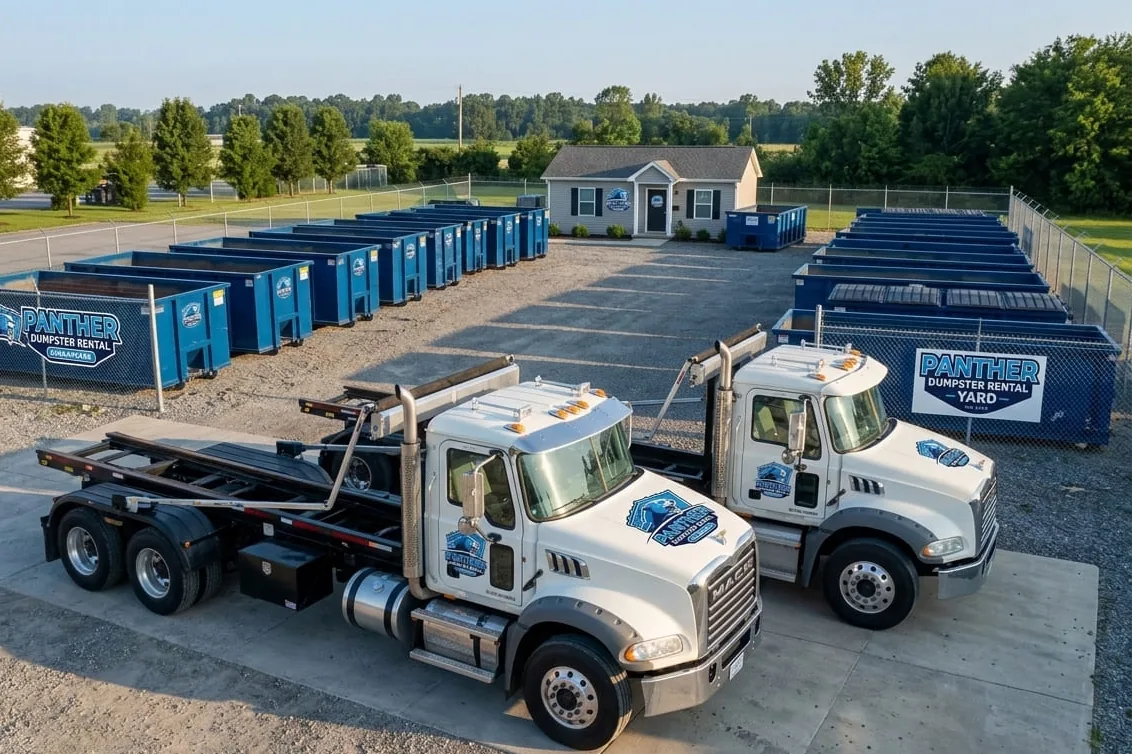
Roll-Off Dumpster Rental Chesapeake VA across Chesapeake and Portsmouth
A roll-off is an open-top steel container with rails welded along the base and wheels at the rear. Our truck runs a cable out, hooks the front of the box, and winches it up onto a tilting bed — then reverses the process at your site so the container rolls off the back and settles onto those rails. That mechanism is why the truck needs a fairly straight approach behind the drop spot, and why almost every access problem we run into is about length rather than width.
It also explains the shape of the service itself. There is no compaction, no crew, no hourly clock running. The container is yours for the rental period, you load it at whatever pace suits the job, and we come back and haul it away. You are buying a flat price with a stated tonnage allowance, and the two things that move that number are the size you choose and what actually goes into it.
What the truck needs from your site
Nearly every delivery problem comes down to one of a handful of things, and all of them are easy to check the day before rather than argue about the morning of.
- A straight approach so the truck can back the container into place square rather than dragging it in sideways
- Overhead clearance from tree limbs, power lines and roof overhangs — the bed tilts high during the drop, and mature trees on older Chesapeake lots are a common culprit
- A firm, reasonably level surface — soft ground near the water in Deep Creek or Western Branch can let a loaded box settle unevenly
- A clear path with cars and equipment moved out of the way, since a loaded container is not something we reposition after the fact
Where a site cannot offer that, the answer is usually a street placement instead. Private property never needs a permit, but a container placed on a public street or sidewalk may need a temporary permit from the City of Chesapeake, and our team can walk you through that process if it comes up.
It is worth walking the actual delivery path rather than eyeballing it from the street. A driveway that looks plenty wide from a car window can turn out to have a mailbox post, a utility pedestal or a low tree branch positioned exactly where the truck needs to swing, and those details rarely show up until the driver is already committed to the approach. A minute spent walking the path yourself, or a couple of photos sent ahead of delivery day, catches almost everything that would otherwise turn into a wasted trip.
Five sizes, and what each one is genuinely for
Yardage measures cubic volume, not weight, and the mistake people make most often is choosing a size on volume alone when their material is dense. Match the container to what you are actually throwing away, not to how big the job feels standing in the middle of it.
- 10 yard — the heavy-debris box. Concrete, brick, tile, dirt, a small bathroom strip-out. Low walls and a short footprint that fits a tighter driveway
- 15 yard — an attic, a garage, a single-room cleanout, a small roof tear-off
- 20 yard — the workhorse. Whole-home decluttering, mid-size remodels, most roofing jobs
- 30 yard — light and bulky material. Framing offcuts, furniture, larger commercial clearances, bigger estate jobs
- 40 yard — the largest we run, and only right for genuinely light material. Never for rubble or masonry
The footprint difference between the smallest and largest containers is meaningful on a typical Chesapeake lot, not just the capacity. A 10 yard fits comfortably in almost any driveway, including the shorter pads common on older streets, while a 40 yard needs a longer, wider approach that not every property can offer regardless of how much volume the job actually produces. Where the site itself is the limiting factor rather than the material, that physical constraint sometimes decides the size question before density or weight ever enters the conversation.
Flat rate, stated tonnage, no invented extras
Our price is a flat rate that covers the container, delivery, the rental period and the haul, with a tonnage allowance stated to you at the time you book. You are told the allowance and exactly what happens if you exceed it in that same conversation, before anything leaves our yard. What actually moves the number is the material: a 20 yard of household furniture and a 20 yard of construction debris are the same container and very different loads.
Two things genuinely add cost, and we would rather tell you now than have it show up on an invoice later — going over the stated tonnage allowance, and mixing in material that has to be pulled back out, like hazardous waste or a stack of tires that never belonged in a general load in the first place.
Extending a rental is a phone call, not a renegotiation. Most projects run a little longer or a little shorter than planned, and we would rather you called to add a few days than rushed a job to hit a return date that was always an estimate to begin with. The same goes the other direction — if a container fills faster than expected and you would rather have it picked up early, that is just as easy a call to make, and it does not change the flat rate you were quoted at booking.
Booking, delivery windows and what changes once the truck leaves
Booking a roll-off is a short conversation once we have the address, the material and the placement spot, and most customers are surprised by how little back-and-forth it actually takes. We will give you a delivery window rather than an exact time, since roll-off routes depend on how the rest of the day's stops go, and we will call ahead as the truck gets closer if you need a heads-up to move a car or clear the last few feet of the drop zone.
Once the container is on the ground, changing anything about it — the size, the placement, whether it needs to move a few feet — is a phone call rather than something we can adjust on-site without you. Drivers are focused on getting the container down safely and quickly, not on renegotiating the order, so if something about the delivery does not match what you expected, calling our office directly is faster than trying to sort it out with the driver in the driveway.
- Expect a delivery window rather than an exact time slot, particularly on a busy day
- Have the drop zone fully clear before the estimated window opens, not just before the truck is visible
- Call our office, not the driver, if something about the order needs to change
- Confirm pickup timing before the rental period ends if your project is running long
Which size suits the job
If you are torn between two sizes, think about density first. Dense material — concrete, brick, dirt, roofing — hits the weight allowance long before the container looks full, so size down and expect to fill only part of the box. Bulky, light material — furniture, framing offcuts, household junk — runs the other way, and you will run out of room well before you run out of weight allowance.
A mixed load — some dense material and some bulky, light material in the same job — is the trickiest case to size from a phone call alone, and it is worth describing both halves of the pile rather than just the part that stands out most in your mind. A garage clear-out that also includes a stack of old pavers, or a remodel producing both drywall scrap and a torn-out tile floor, needs the heavier component accounted for even if it is a smaller share of the overall volume, since it is the density that ultimately sets the legal limit on how full the container can actually go.
- Describe the job on the phone rather than guessing at a yardage — we size these calls every day
- When in doubt between two sizes for dense material, take the smaller one and plan a second pull if needed
- When in doubt for bulky, light material, take the larger one — running out of room mid-job costs more than the size difference would have
- Load heavy items low and flat, then fill in around and above them
- Ask about the tonnage allowance for your chosen size before the truck leaves the yard, not after it is delivered
Sizes
Which container for roll-off dumpster rental?
Every service runs in all four sizes. Match the material to the weight allowance and the rest takes care of itself.
| Size | Dimensions | Capacity | Weight included | Best for |
|---|---|---|---|---|
| 10 Yard Dumpster | 12 ft long × 8 ft wide × 3.5 ft high | about 3 pickup truck loads | 1–2 tons | Small bathroom remodels, single-room cleanouts, concrete and heavy debris, roofing up to about 15 squares. |
| 15 Yard Dumpster | 16 ft long × 8 ft wide × 4 ft high | about 4–5 pickup truck loads | 2–3 tons | Attic and garage cleanouts, kitchen remodels, medium roof tear-offs, small deck removals. |
| 20 Yard Dumpster | 22 ft long × 7.5 ft wide × 4.5 ft high | about 6 pickup truck loads | 3–4 tons | Whole-home decluttering, flooring and siding jobs, large tear-offs, drywall and mud phases. |
| 30 Yard Dumpster | 22 ft long × 8 ft wide × 6 ft high | about 9 pickup truck loads | 4–5 tons | Full-house renovations, new construction, estate clearances, commercial fit-outs and demolition. |
| 40 Yard Dumpster | 22 ft long × 8 ft wide × 8 ft high | about 12 pickup truck loads | 5–6 tons | Large commercial fit-outs, industrial clear-outs, major renovations and high-volume light debris. |
Talk to a real person
Need roll-off dumpster rental in Chesapeake?
Call (757) 432-2979 and describe the job. You will get a flat price and a delivery time on the same call — most orders before noon go out the same day.
Mon–Sat 7:00am – 6:00pm · Sun by appointment
Answers
Roll-Off Dumpster Rental — your questions
What does roll-off actually mean?
It describes how the container is handled. The box has steel rails along its base and wheels at the rear, and our truck winches it up onto a tilting bed with a cable, then rolls it back off at your site. Nothing is compacted and no crew comes with it. That mechanism is why the truck needs a fairly long straight approach rather than a wide one.
How much room do you need to deliver a dumpster?
A reasonably straight approach so the truck can back the container down, and enough overhead clearance for the bed to tilt during the drop. Mature trees and power lines on older Chesapeake lots stop more deliveries than narrow driveways do. If you are unsure, describe the spot on the phone or send a photo and we will tell you before the truck is loaded.
How is a roll-off dumpster priced?
A flat rate covers delivery, the rental period, the haul and disposal up to a stated tonnage allowance. You are told the allowance and how overage works when you book, so there is nothing to discover on the invoice. The size you take and how dense your material is are the two things that actually move the number.
Can I move the dumpster once it is delivered?
No, please do not try. A loaded roll-off weighs several tons, and dragging it will damage whatever surface it sits on and can leave it somewhere our truck cannot safely recover it from. Decide the placement before delivery, walk it with the driver if you are unsure, and clear parked vehicles first. If it genuinely needs to move, call us and we will reposition it.
Which size should I choose if I'm between two options?
Take the smaller size if your material is dense — concrete, brick, dirt, roofing — since you will hit the weight allowance well before the container looks full. Take the larger size if the material is bulky and light, like furniture or framing offcuts. Most people overestimate weight and underestimate volume, which is backwards on a genuinely heavy job.
Service area
Roll-Off Dumpster Rental across South Hampton Roads
We run roll-off dumpsters out of our 2324 Chesapeake Square Ring Rd yard across every corner of Chesapeake — from Great Bridge and Greenbrier out to Deep Creek, Western Branch and South Norfolk, down to Hickory and Grassfield near the North Carolina line, and across the city lines into Portsmouth, Suffolk and Virginia Beach. If your neighborhood is not on this list, call us anyway. We probably still get there.