
Clean green loads
Yard Waste Dumpster Rental Chesapeake VA
Brush, branches, storm debris and landscaping waste handled as a clean green load — kept separate from general trash so it can actually be processed the right way.
- Licensed & insured
- Same-day delivery
- Flat-rate pricing
- Locally owned
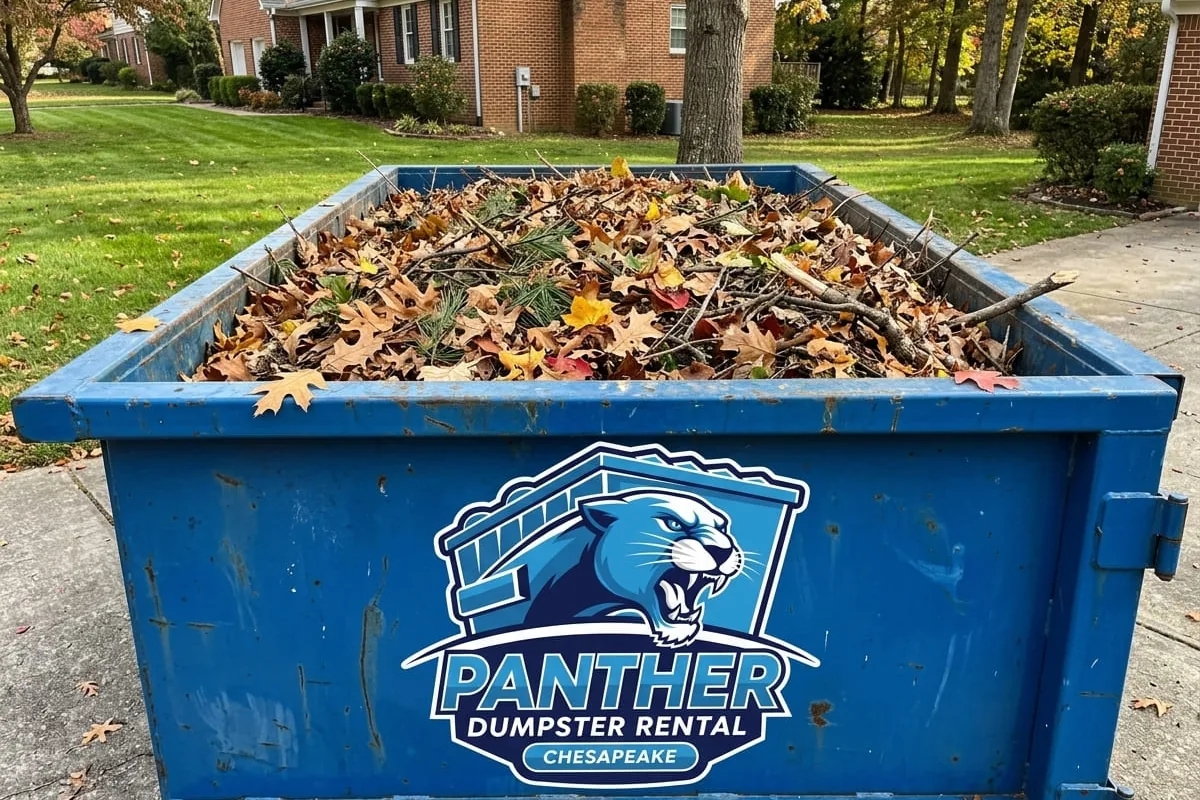
Yard Waste Dumpster Rental Chesapeake VA across Chesapeake and Portsmouth
Chesapeake's landscape runs from dense residential canopy in the older boroughs to open farmland and wooded acreage toward the south of the city, near the edge of the Great Dismal Swamp. That mix means yard waste jobs here range from a modest hedge trim in a subdivision near Greenbrier to genuine acreage clearing on rural property, and both produce the same core material: brush, branches, leaves, grass clippings and storm-downed limbs that need to travel separately from general household or construction debris.
It is a simple idea once you set it up right. Brush, branches, leaves, grass, hedge trimmings, garden clearance and storm blowdown all belong together in a clean green container. What does not belong is treated lumber from an old fence, plastic pots, the bags material got hauled in, root balls full of soil and stone, and anything with a nail still in it. Keep those out and the load moves through processing without any back-and-forth.
Storm season and what a summer thunderstorm or tropical system leaves behind
Hurricane season across South Hampton Roads runs roughly June through November, and it is not just tropical systems that cause damage — a fast-moving summer thunderstorm can bring down limbs and even whole trees with very little warning, particularly in older neighborhoods with mature canopy around Great Bridge and South Norfolk. After a significant storm, municipal cleanup can take time to reach every street, which is exactly when a container on your own property starts making sense.
Storm debris tends to arrive mixed, which is the real trap. A downed tree that took a section of fence and part of a shed roof with it produces green waste, treated lumber, roofing material and sometimes metal all in the same pile — several separate streams rather than one. Sort it as you drag it to the curb or the container rather than trying to untangle it afterward. If the storm also damaged the roof, that tear-off needs its own dedicated container rather than riding along with the yard debris.
Access after a storm is often the real constraint rather than container availability itself. Downed limbs blocking a driveway or a fence panel leaning across the intended drop spot can stop a delivery just as effectively as a truck shortage would, so a quick call ahead describing what the yard actually looks like — not just what needs to go in the container, but what is currently in the way of getting it there — helps us plan the visit properly rather than sending a truck that cannot reach the spot once it arrives.
Tree work, brush and stumps
Brush is deceptive. It is mostly air, which is why a modest pile of limbs swallows far more container space than anyone expects going in. Cutting branches down to manageable lengths and loading in layers rather than tossing them in whole roughly doubles what actually fits, and keeps material from springing back up over the rails.
- Cut brush and limbs to shorter, manageable lengths where you can, and stack rather than pile loosely
- Trunk sections are fine within reason, but large rounds get heavy fast — mention them on the call
- Stumps are a call-first item. Soil and stone in the root ball make them dramatically denser than the brush around them
- Keep soil separated from a green load entirely — dirt belongs in a dedicated heavy debris container instead
Professional tree services generally have their own equipment for chipping and hauling, so the jobs where a container makes the most sense tend to be ones where a homeowner or a smaller crew is doing the cutting by hand rather than running a chipper on-site. If a tree service is involved and already planning to haul the bulk of the material away, a smaller container for the leftover brush and cleanup debris is often all that is actually needed, rather than sizing for the whole tree as if nothing else were removing material from the property.
Landscaping projects and rural acreage work
Not every yard waste job is storm-driven. Landscaping renovations, overgrown property clearing, and seasonal cutback all generate genuine volume, and the properties producing the most volume tend to be at the extremes — small residential lots being fully replanted, and larger rural parcels toward the southern part of Chesapeake where acreage rather than storm damage drives the job. Both are routine work for us, just sized differently.
Spring tends to bring cutback and clearance work as growth picks up, while fall brings leaf volume and pre-winter tree trimming as property owners get ahead of the next storm season. Booking ahead in both windows helps, since demand for containers tends to spike in the same week across the whole region rather than spreading out evenly.
Properties near the edge of the Great Dismal Swamp and the wooded southern parcels tend to produce a different mix than a typical subdivision lot — more mature hardwood limbs, thicker brush, and occasionally invasive vine growth like English ivy or kudzu that has taken over a fence line or tree canopy. That kind of vegetation is still clean green waste and belongs in the same container as ordinary yard debris, but the sheer density of a vine-choked thicket means it is worth describing the job in more detail than "some brush" when you call, so we can size for the reality of the pull rather than a typical suburban trim.
Lawn care companies, HOA landscaping crews and recurring green waste
Not every yard waste account is a single homeowner clearing a storm mess once. Landscaping companies working multiple properties across Chesapeake, and HOA-contracted crews maintaining common areas in the larger subdivisions, generate green waste on a recurring basis rather than as a one-off project, and that volume adds up differently than a single household's cleanup. A standing arrangement, similar to a commercial swap schedule, works well for a landscaping business that needs a predictable place to dump clippings, brush and trimmings across a route of properties rather than hauling it back to a yard themselves.
The same clean-load principle applies regardless of who is generating the material — a landscaping crew's clippings and brush need to stay separate from any construction debris a property might also be generating, such as during a hardscaping project that mixes paver removal with the plant material coming out at the same time. Keeping those streams apart from the start, even on a job with both types of debris happening simultaneously, avoids turning a clean, low-cost green load into a mixed one.
- Ask about a standing account if you run a landscaping or lawn care business with recurring volume
- Keep green waste separate from any hardscaping or construction debris on a combined project
- HOA-contracted crews maintaining common areas can set up the same kind of recurring schedule as a commercial account
- Confirm container size against your route's typical weekly volume rather than a single job's worth
Which size suits the job
Because brush and leaves are mostly volume rather than weight, size up more readily than you would for a demolition or concrete job. A 15 yard covers a modest trim or cutback job. A 20 yard is the usual choice for a full tree-work day or a significant storm cleanup. Larger acreage clearing or a whole-property landscaping overhaul may need multiple pulls rather than one oversized container.
A single fallen tree is a common enough call that it is worth sizing on its own terms rather than by the general storm-cleanup rule of thumb. A modest ornamental tree down in a yard is often a 15 or 20 yard job once it is cut and stacked. A large mature hardwood, the kind common on older lots around Great Bridge and South Norfolk, can easily fill a 20 yard on its own and sometimes needs a second pull, particularly if the trunk itself is being cut into rounds rather than removed whole by a tree service. Describe the trunk diameter roughly when you call and we can give you a much closer estimate than a generic size guess would.
- Cut and stack rather than toss loosely — you can roughly double what fits in the same container
- Keep soil, root balls and stumps out of a general green load and call ahead about them separately
- Keep treated lumber, plastic and any construction material entirely out of the yard waste container
- Book ahead of the spring and fall rush windows when demand across the region spikes
- For mixed storm debris, describe the pile on the phone so we can tell you whether it needs more than one container
Sizes
Which container for yard waste & storm debris?
Every service runs in all four sizes. Match the material to the weight allowance and the rest takes care of itself.
| Size | Dimensions | Capacity | Weight included | Best for |
|---|---|---|---|---|
| 10 Yard Dumpster | 12 ft long × 8 ft wide × 3.5 ft high | about 3 pickup truck loads | 1–2 tons | Small bathroom remodels, single-room cleanouts, concrete and heavy debris, roofing up to about 15 squares. |
| 15 Yard Dumpster | 16 ft long × 8 ft wide × 4 ft high | about 4–5 pickup truck loads | 2–3 tons | Attic and garage cleanouts, kitchen remodels, medium roof tear-offs, small deck removals. |
| 20 Yard Dumpster | 22 ft long × 7.5 ft wide × 4.5 ft high | about 6 pickup truck loads | 3–4 tons | Whole-home decluttering, flooring and siding jobs, large tear-offs, drywall and mud phases. |
| 30 Yard Dumpster | 22 ft long × 8 ft wide × 6 ft high | about 9 pickup truck loads | 4–5 tons | Full-house renovations, new construction, estate clearances, commercial fit-outs and demolition. |
| 40 Yard Dumpster | 22 ft long × 8 ft wide × 8 ft high | about 12 pickup truck loads | 5–6 tons | Large commercial fit-outs, industrial clear-outs, major renovations and high-volume light debris. |
Talk to a real person
Need yard waste & storm debris in Chesapeake?
Call (757) 432-2979 and describe the job. You will get a flat price and a delivery time on the same call — most orders before noon go out the same day.
Mon–Sat 7:00am – 6:00pm · Sun by appointment
Answers
Yard Waste & Storm Debris — your questions
Can yard waste go in a regular general dumpster?
We would rather it did not. Green material needs to be processed separately from general household or construction debris, so we run it as its own clean load. It is genuinely simpler this way — a container of nothing but brush and leaves moves through processing without needing to be sorted first.
What actually counts as yard waste?
Leaves, grass clippings, brush, branches, hedge and shrub trimmings, garden clearance and storm blowdown. What does not count is anything manufactured or treated — pressure-treated fence lumber, decking, plastic pots, landscape fabric, the bags material arrived in, and soil or stone attached to a root ball. Ask us about anything you are unsure of before it goes in.
Can I put a tree stump in the yard waste container?
Call us before you do. Stumps carry a lot of soil and stone in the root ball, which makes them dramatically heavier than the brush around them, and one large stump can account for most of a container's weight allowance on its own. Smaller stumps are usually fine; larger ones may need a dedicated heavy debris container instead.
What size do I need for storm cleanup after a hurricane or bad thunderstorm?
A 20 yard is the usual starting point for a household dealing with downed limbs and general storm debris, since brush is mostly air and fills a container faster than its weight suggests. Cutting material to shorter lengths and stacking in layers roughly doubles what fits. A whole tree down is a different conversation — describe it and we will tell you how many pulls it realistically needs.
How quickly can you deliver after a storm hits Chesapeake?
As quickly as the roads and conditions allow, and often the same day once weather has actually cleared. Right after a tropical system or a severe thunderstorm, the constraint is usually road access rather than container availability, since utility and cleanup crews are working the same streets. We will be straight with you about the realistic window rather than promise a slot we cannot hold.
Service area
Yard Waste & Storm Debris across South Hampton Roads
We run roll-off dumpsters out of our 2324 Chesapeake Square Ring Rd yard across every corner of Chesapeake — from Great Bridge and Greenbrier out to Deep Creek, Western Branch and South Norfolk, down to Hickory and Grassfield near the North Carolina line, and across the city lines into Portsmouth, Suffolk and Virginia Beach. If your neighborhood is not on this list, call us anyway. We probably still get there.