
Heavy-duty containers
Demolition Debris Dumpster Rental Chesapeake VA
Interior gut-outs, garage and outbuilding teardowns and structure demolition all produce heavier debris than most people expect. Containers sized for that weight, with the material streams kept apart from the first day.
- Licensed & insured
- Same-day delivery
- Flat-rate pricing
- Locally owned
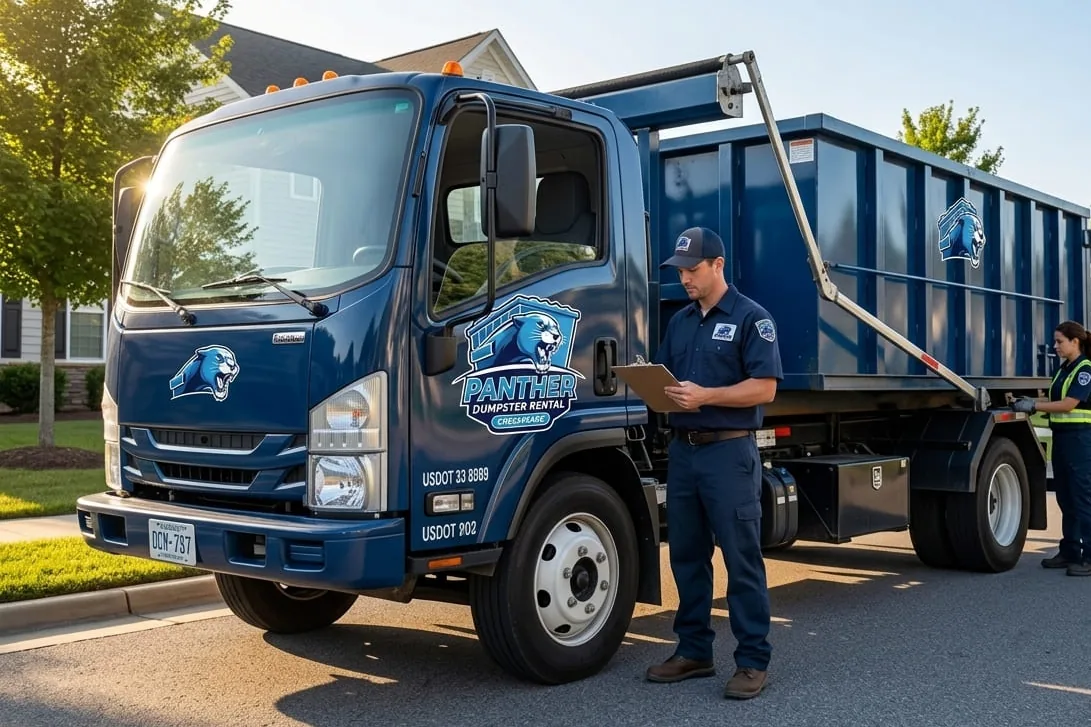
Demolition Debris Dumpster Rental Chesapeake VA across Chesapeake and Portsmouth
A gut-out in a home with drywall walls and a modern slab or crawlspace foundation is a different job from a teardown of an older outbuilding with plaster, full dimensional lumber and a genuine foundation underneath. Both look like demolition on a schedule. Neither behaves the same way inside a container. The age and construction of what is coming down matters more to sizing than the square footage does.
So we size demolition jobs by weight and a marked fill line rather than by room count or square footage. A container that still looks half empty can already be at its legal weight allowance, and there is no fixing that once the load is on the scale. Tell us the age of the structure and what it is actually built from before picking a size, and the rest of the job gets considerably easier to plan.
Interior demolition weighs more than it looks like
Rough numbers we use on the phone: plaster and lath walls, where they exist, run several times heavier per square foot than modern drywall once the lath and the plaster keys behind it are accounted for. Ceilings are usually the heaviest surface in a room. A single moderately sized room stripped down to the studs, particularly in an older structure, can produce well over a ton on its own.
- Size a container to a marked fill line rather than to the top of the rails on any demolition job
- Load flat and even across the floor of the container — a load heaped at one end is genuinely unsafe to haul
- Damp material down as you strip it where dust is a concern, particularly on a job close to neighboring properties
- Keep clean wood separated out where you can — it has its own handling path apart from general demolition debris
Flooring adds its own weight that is easy to miss when estimating a room. Ceramic or porcelain tile with the mortar bed underneath, and in some older homes a layer of hardwood over an even older subfloor, both add real tonnage on top of whatever the walls and ceiling contribute. A full room gut that includes flooring, not just wall and ceiling material, typically needs the size conversation to account for an extra layer of dense debris most people do not think to mention until the container is already on-site.
Older structures: have the building assessed before demolition starts
Chesapeake has a genuine mix of housing stock and outbuildings, from newer construction in subdivisions out toward Grassfield and Hickory to considerably older structures around the historic parts of the city and the farmland to the south. Anything built decades ago carries a real possibility of asbestos in old pipe insulation, floor tile or roofing material, and lead paint on original trim, doors and windows. Neither is a reason to abandon a demolition project — both are a reason to have the structure assessed by a qualified professional before work begins.
Regulated asbestos and lead waste do not belong in one of our containers and need to be handled through a properly licensed contractor following their own disposal path, separate from and ahead of general demolition debris.
The assessment itself does not have to hold up the whole project. In most cases it is a targeted inspection of the specific materials likely to be disturbed — pipe wrap in a mechanical room, floor tile in a kitchen or bath, trim and window glazing being removed — rather than a full survey of the entire structure, and a straightforward result often clears a demolition to proceed within days. Building that step into the schedule up front, rather than reacting to it once demolition has already started, is what keeps an older-home project on the original timeline instead of stalling mid-teardown.
Keeping material streams apart on a teardown
A demolition job produces nearly every category of debris at once — masonry, metal, wood, drywall — and throwing it all into one container does not make the sorting problem disappear, it just moves the cost of sorting it downstream. The practical version on a tight site is a general demolition container plus a bit of staging discipline: a metal pile for anything with scrap value, a clean wood pile, and masonry routed into its own dedicated heavy container.
Old radiators, cast iron pipe, ductwork and appliances are often worth pulling out carefully rather than demolishing in place, since they hold real scrap value once separated from the general pile. A 20 yard is the size most interior gut-outs settle on, with a dedicated heavy container running alongside it for masonry.
Insulation is worth a specific mention since it behaves differently from every other material on a demolition site. Loose blown-in insulation is extremely light by weight but takes up enormous volume for what it actually is, and older batt insulation that has been compressed or gotten damp over the years can carry mold or pest contamination worth flagging before it goes anywhere near a general container. Bag loose insulation as it comes out rather than letting it drift through the site, and mention any obvious mold or pest issues when you book so we can plan the container and disposal path around it.
Permits, dust control and working near occupied neighbors
Demolition work on private property does not need a dumpster placement permit any more than any other container does — the same private-property rule applies. What is worth planning for separately is dust and noise, particularly on a lot in an established neighborhood like South Norfolk or Deep Creek where the next house is close enough that a full day of demolition is genuinely noticeable to whoever lives there. Wetting material down as it comes out, timing louder work for reasonable hours, and giving an immediate neighbor a heads-up before the first wall comes down tend to prevent the calls that actually slow a project down.
None of that is about the dumpster itself, but it affects how smoothly the container part of the job goes. A demolition site that is generating complaints is a site where access can suddenly get complicated — a car parked to block a driver's approach out of frustration, a call to the city about noise that brings someone out to the site mid-swap. Keeping the immediate neighbors informed, even informally, costs nothing and tends to keep the container side of the project boring in the best possible way, which is exactly how we prefer it to go on every job we run.
- No permit is needed for a demolition dumpster on private property
- Wet down dusty material as it comes out, especially on lots close to neighboring homes
- Give immediate neighbors a heads-up before major demolition work starts
- Keep the container's approach clear of anything that could block a swap mid-project
Which size suits the job
Interior demolition and strip-out debris is dense enough to need sizing by weight, not room count — a 20 yard filled to a marked line handles most jobs of that kind. Masonry, brick and concrete belong in a dedicated heavy container rather than mixed with general demolition waste. Full structure teardowns involving both light framing and heavier materials often need two container types running side by side rather than one box handling everything.
Garage and outbuilding demolition sits in its own middle ground worth calling out separately from a full house teardown. These structures are often simpler in construction — less plumbing and electrical to deal with, fewer interior finishes — but a detached garage with a genuine concrete slab floor still needs the same weight-first thinking as an interior gut-out, and the slab itself typically wants its own dedicated heavy container rather than riding along with the framing and roofing debris from the structure above it. Describing the outbuilding's construction, not just its size, helps us put together an accurate plan.
- Size to a marked fill line, not to the visible top of the container, on any demolition job
- Route masonry and heavy debris into a separate dedicated container from day one
- Stage metal and appliances separately — they carry real scrap value once pulled from the general pile
- Have older structures assessed for asbestos and lead before demolition begins, not after
- Plan for a second pull on a full structure teardown rather than assuming one container covers it
Sizes
Which container for demolition debris dumpsters?
Every service runs in all four sizes. Match the material to the weight allowance and the rest takes care of itself.
| Size | Dimensions | Capacity | Weight included | Best for |
|---|---|---|---|---|
| 10 Yard Dumpster | 12 ft long × 8 ft wide × 3.5 ft high | about 3 pickup truck loads | 1–2 tons | Small bathroom remodels, single-room cleanouts, concrete and heavy debris, roofing up to about 15 squares. |
| 15 Yard Dumpster | 16 ft long × 8 ft wide × 4 ft high | about 4–5 pickup truck loads | 2–3 tons | Attic and garage cleanouts, kitchen remodels, medium roof tear-offs, small deck removals. |
| 20 Yard Dumpster | 22 ft long × 7.5 ft wide × 4.5 ft high | about 6 pickup truck loads | 3–4 tons | Whole-home decluttering, flooring and siding jobs, large tear-offs, drywall and mud phases. |
| 30 Yard Dumpster | 22 ft long × 8 ft wide × 6 ft high | about 9 pickup truck loads | 4–5 tons | Full-house renovations, new construction, estate clearances, commercial fit-outs and demolition. |
| 40 Yard Dumpster | 22 ft long × 8 ft wide × 8 ft high | about 12 pickup truck loads | 5–6 tons | Large commercial fit-outs, industrial clear-outs, major renovations and high-volume light debris. |
Talk to a real person
Need demolition debris dumpsters in Chesapeake?
Call (757) 432-2979 and describe the job. You will get a flat price and a delivery time on the same call — most orders before noon go out the same day.
Mon–Sat 7:00am – 6:00pm · Sun by appointment
Answers
Demolition Debris Dumpsters — your questions
What size dumpster do I need for an interior gut-out?
For most rooms in a typical home, a 20 yard filled to a marked line rather than to the top. Interior demolition debris, especially in an older structure, is heavy enough that a container looking half empty can already be at its weight allowance. Tell us the age of the structure and what the walls and ceilings are built from when you call.
Is demolition debris really heavier than people expect?
Yes, especially in older structures. Plaster and lath walls, where they exist, run considerably heavier per square foot than modern drywall, and ceilings are usually the heaviest surface in any room. A single room stripped to the studs can produce well over a ton, which is why demolition containers get sized by weight and a marked fill line rather than by room count.
What about asbestos and lead paint in an older building?
Assume both are possible in any structure built several decades ago, and have it assessed by a licensed professional before demolition starts. Neither material can go in one of our containers — regulated asbestos and lead waste follow their own licensed disposal path through a properly certified contractor.
Can I put concrete and brick in with the general demolition debris?
We would recommend against it. Masonry is dense enough that mixing it into a general demolition container risks exceeding what the container and truck can safely handle. A dedicated heavy container with its own marked fill line is the right way to handle concrete, brick and block from a demolition job.
Do you take material from full structure teardowns, not just interior gut-outs?
Yes. A full teardown often needs more than one container type — a general demolition container for framing and mixed debris, and a dedicated heavy container for masonry and foundation material. Describe the structure and what it is built from and we will put together a plan that covers the whole job rather than sizing for just one phase.
Service area
Demolition Debris Dumpsters across South Hampton Roads
We run roll-off dumpsters out of our 2324 Chesapeake Square Ring Rd yard across every corner of Chesapeake — from Great Bridge and Greenbrier out to Deep Creek, Western Branch and South Norfolk, down to Hickory and Grassfield near the North Carolina line, and across the city lines into Portsmouth, Suffolk and Virginia Beach. If your neighborhood is not on this list, call us anyway. We probably still get there.