Construction Debris Dumpster Sizing Guide | Chesapeake, VA
A phase-by-phase dumpster sizing guide for Chesapeake builders: heavy debris separation, swap-out scheduling, and jobsite placement.
ReadChesapeake, VA guide
A Hampton Roads dumpster crew's guide to sizing, staging, and timing a storm cleanup container before or after a Chesapeake hurricane.
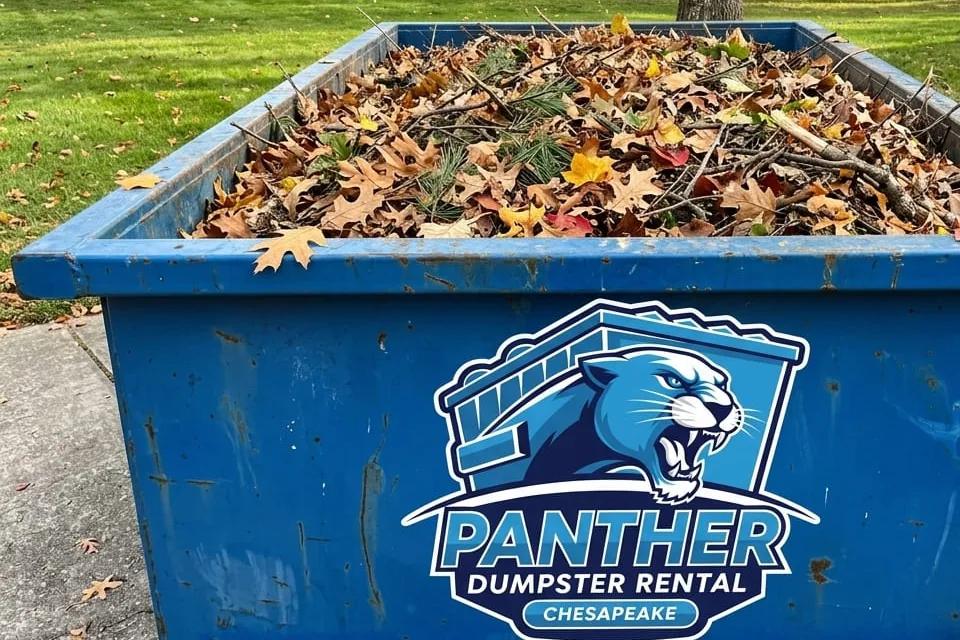
Hurricane season in Hampton Roads is not an abstraction. If you own property in Chesapeake, you already know the drill: watch the tropics from June through the back half of November, keep an eye on the track once something spins up off the Carolinas, and understand that even a glancing hit can leave a yard full of broken limbs, a fence flattened along the property line, and standing water in the garage by morning. This guide covers what storm cleanup actually looks like here, how to size a dumpster for wet, heavy debris, and why the smart move is booking a container before the wind starts, not after.
The Atlantic hurricane season officially runs June 1 through November 30, with the statistical peak from late August through September. Chesapeake sits inland from the Atlantic but is still very much a coastal city, connected to the Elizabeth River, the Dismal Swamp, and a network of canals and low creeks that back up fast when a tropical system parks rain over the region for a day.
What makes Chesapeake specifically tricky is the terrain. This is flat, low-lying ground with a high water table across most neighborhoods, from the older sections near Great Bridge and South Norfolk to newer subdivisions off Battlefield Boulevard and Cedar Road. Water does not have far to travel to find the surface, so yards, crawlspaces, and low-lying roads flood well before a storm officially makes landfall — sometimes from nothing more than a slow-moving thunderstorm parked overhead for a few hours. Add storm surge pushing up the Elizabeth River and the Southern Branch, and low-lying stretches of the city can see water rise with very little warning.
None of this requires a named hurricane. Chesapeake's humid subtropical summers bring frequent, sometimes violent thunderstorms on their own, with straight-line wind gusts that snap limbs and drop trees just as effectively as a tropical storm's outer bands. A July afternoon storm can leave a debris pile that looks a lot like the one after a tropical storm graze — just smaller.
After years of pulling roll-offs out of Hampton Roads neighborhoods following wind events, the debris we haul falls into a short, predictable list:
Most storm cleanup jobs involve two or three of these at once — a tree lands on the fence, the fence break exposes crawlspace vents to blowing rain, and now there is a mixed pile of green waste, lumber, and wet insulation in the side yard.
Both approaches work, but they solve different problems, and understanding the difference changes how you plan.
Booking ahead of a storm means reserving a container to arrive as soon as it is safe for our trucks to move after the event — once local roads are cleared and wind has dropped below what our drivers can safely work in. Pre-booking does not put a dumpster in your driveway during the storm itself; roll-offs should never be delivered or placed in the direct path of a storm making landfall, since a container is one more object that can catch wind or shift if surge or flash flooding reaches the property. What pre-booking does is lock in your spot in the delivery queue so you are near the front of the line once trucks are rolling again, rather than calling in on day three behind a hundred other households.
Booking after the storm is the more common path for smaller, unplanned damage — a single tree down, a fence section blown over, a few days of cleanup rather than a full renovation. This works fine most of the time, but it runs into the same problem every storm season: everyone reaches for the phone at once.
If a hurricane or strong tropical system is forecast to track anywhere near Hampton Roads, our advice is simple — call while the storm is still offshore. You are not obligated to take the container the day it lands, and if the storm turns and misses us, canceling or rescheduling is a five-minute phone call. Being on the schedule already is worth far more than the flexibility of waiting to see what happens.
The single biggest mistake homeowners make with storm debris is sizing the dumpster the way they would for a cleanout — by picturing how much space the pile takes up. Green and storm debris does not work that way. Wet limbs, waterlogged brush, and rain-soaked lumber are dramatically heavier than the same material dry, and every roll-off comes with a tonnage allowance built into the price, not just a volume limit. A 20-yard container that looks half full of branches can already be at its weight limit if that brush went in wet.
This matters most in the days right after a storm, when everything is soaked. Oak or pine limbs fresh off the ground after a tropical downpour run measurably heavier than the same wood dry, from the water the bark and grain have absorbed. The same is true of storage boxes and drywall pulled from a flooded garage — it is the tonnage limit, not how full the box looks, that decides whether you stay within your rental or pay an overage.
Here is how we size storm jobs across Chesapeake, Portsmouth, Suffolk, and Virginia Beach:
| Debris Type | Typical Scenario | Recommended Container | Weight Note |
|---|---|---|---|
| Small limb and branch pickup | A few downed limbs, storm-thinned canopy, no full tree loss | 10-yard | Green waste is heavy — fills slower than you'd think even in a small box |
| One tree down plus fence damage | Single large tree on a fence line or roof, mixed wood debris | 15 to 20-yard | Wet wood can push a partly-filled 20-yard near its tonnage cap |
| Whole-yard storm cleanup | Multiple trees or major limb loss across the property | 20 to 30-yard | Expect weight, not the visual fill line, to be the limiting factor |
| Flooded garage or shed contents | Waterlogged storage, drywall, carpet, damaged furniture | 15 to 20-yard | Saturated household goods are far heavier than dry equivalents |
| Roof tear-off after storm damage | Wind-torn shingles, felt, decking replaced during repair | 15 to 20-yard | Shingles are dense; roofing loads are almost always weight-limited |
| Combined major damage | Tree, fence, shed, and water damage together | 30-yard or two containers | Consider separating green waste from construction debris where possible |
When you call to book, tell us what came down — species of tree if you know it, roughly how much fence, whether water got into a garage or shed — and we will size the container off the weight, not just the pile you can see from the driveway. On a genuinely mixed job, splitting green waste into one container and building materials or flooded goods into a second often costs less than overloading a single box past its tonnage allowance.
How you stage debris while waiting on a delivery affects both your safety and how quickly the crew can load once the container is on site.
Storm debris collected from Chesapeake properties is typically hauled to the Chesapeake Transfer Station at 901 Hollowell Lane, operated by the Southeastern Public Service Authority, or another SPSA facility appropriate for the material type. SPSA handles municipal solid waste and yard debris across the South Hampton Roads region, and after a significant storm, regional facilities coordinate on extended hours for the surge in green waste that follows. Knowing that infrastructure gets strained the same week everyone else is calling for cleanup is part of why timing your rental matters.
Every storm that tracks toward Hampton Roads produces the same pattern on our phones: a trickle of calls while the storm is still offshore, then a flood of calls the moment the wind dies down and people can get outside and see the damage. Trucks and available containers do not multiply to match that spike — the fleet that serves Chesapeake, Portsmouth, Suffolk, and Virginia Beach on a normal week is the same fleet covering all four cities at once right after a storm.
That is the whole case for calling early. A homeowner who reserves a container while a storm is still a few days out, even understanding the delivery day may shift, sits ahead of the queue that forms the moment the storm passes. Waiting to see what happens means competing with every other household in South Hampton Roads for the same limited trucks on the same two or three days. Reserving ahead costs nothing if the storm weakens or turns out to sea — a quick call cancels or reschedules it. It can cost real time, and a yard full of hazardous debris for a week or more, if you wait and the storm hits as forecast.
If you are watching a system in the forecast, the smartest call is the one you make before the first outer bands arrive.
Talk to a real person
Call and describe the job. Flat price, stated tonnage, and a delivery time on the same call.
Mon–Sat 7:00am – 6:00pm · Sun by appointment
From this guide
As soon as a storm is forecast to track anywhere near Hampton Roads, call and get on the schedule. You don't have to commit to a fixed delivery day — reserving a spot in the queue while the storm is still offshore means you're near the front of the line once it's safe for trucks to deliver, instead of calling in behind everyone else once the wind stops. If the storm weakens or turns out to sea, canceling or rescheduling takes a five-minute call.
Every roll-off rental includes a tonnage allowance, not just a volume limit. Storm debris — downed limbs, waterlogged brush, rain-soaked fence pickets and lumber — is far heavier wet than dry, so a container can reach its weight limit well before it looks full. This is especially true right after a storm, when everything on the ground has been soaked for hours or days.
No. Containers should not be delivered or placed in the direct path of a storm making landfall, and our trucks do not run in unsafe wind or flooding conditions. Pre-booking reserves your place in line; the actual delivery happens once conditions are safe, typically as soon as local roads are passable after the storm passes.
Yes. Fewer than 1% of homes in Chesapeake have a basement because of the high water table, so storm-related flooding here typically shows up at ground level — garages, sheds, crawlspaces, and screened porches — rather than in a basement. Waterlogged storage boxes, carpet padding, and damaged furniture from a flooded garage are common storm-cleanup hauls.
Most storm debris collected in Chesapeake goes to the Chesapeake Transfer Station at 901 Hollowell Lane, operated by the Southeastern Public Service Authority (SPSA), which serves the South Hampton Roads region including Chesapeake, Portsmouth, Suffolk, and Virginia Beach.
Keep reading
A phase-by-phase dumpster sizing guide for Chesapeake builders: heavy debris separation, swap-out scheduling, and jobsite placement.
ReadA calm, room-by-room guide to clearing a loved one's Chesapeake home — what to keep, donate, and haul away, at a pace that actually works.
ReadA practical sizing guide for roofing tear-off dumpsters in Chesapeake, VA, covering squares, layers, weight limits, and storm-season timing.
Read