
Estate Cleanout Checklist for Chesapeake, VA Families
A calm, room-by-room guide to clearing a loved one's Chesapeake home — what to keep, donate, and haul away, at a pace that actually works.
ReadChesapeake, VA guide
A phase-by-phase dumpster sizing guide for Chesapeake builders: heavy debris separation, swap-out scheduling, and jobsite placement.
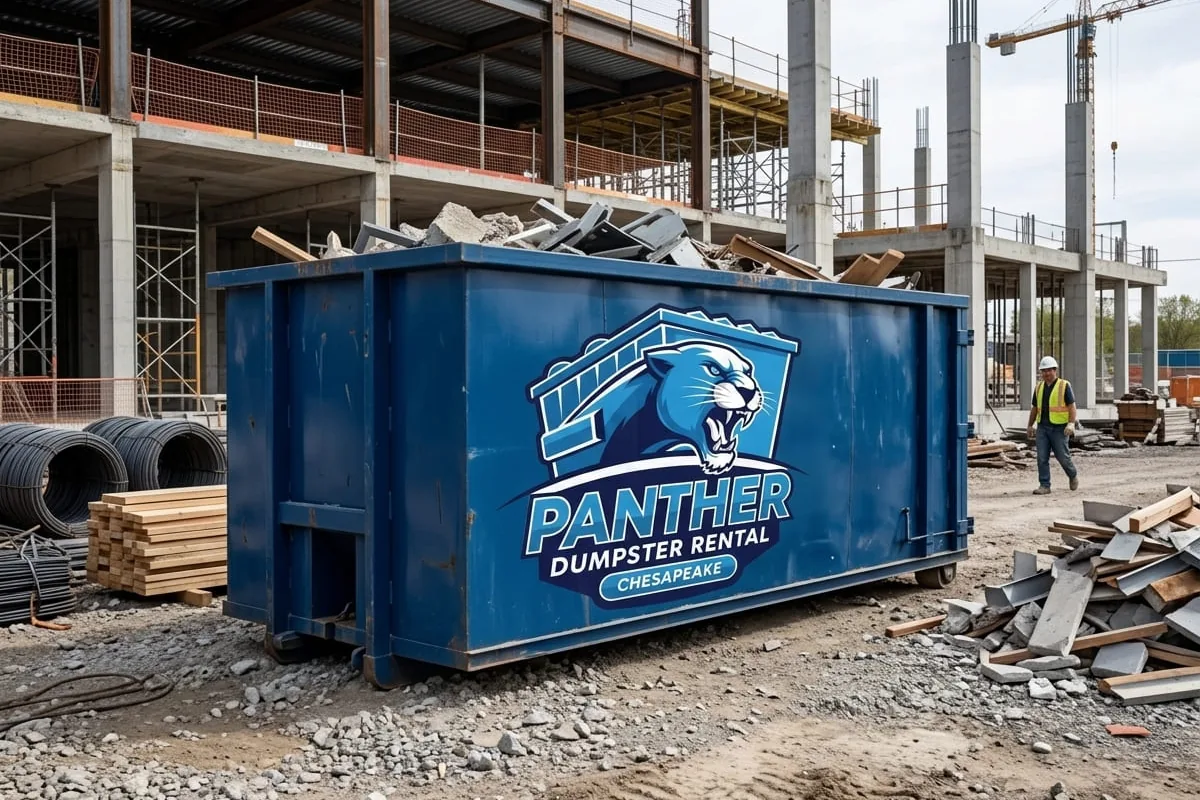
Every contractor learns the same lesson eventually: the dumpster you order on day one of a job is rarely right for day twelve. Demo debris and finish-carpentry offcuts do not behave the same way, and a container that looked generous during rough framing can be full before lunch on drywall day. In Chesapeake, where jobs run from crawlspace additions in Great Bridge to commercial build-outs off Battlefield Boulevard, sizing by project phase rather than by "the job" keeps a schedule on track and a disposal budget from ballooning halfway through.
This guide covers what we tell contractors and property managers who call our yard every week: how to size by phase, when to split heavy debris into its own container, how to keep swap-outs from stalling a crew, and what site access actually requires around here.
Treating a renovation as one undifferentiated pile of "construction waste" is how contractors end up either paying for empty air or scrambling for an emergency swap mid-week. The debris stream changes character at every phase, and the container should change with it.
Demo debris is dense before it is anything else. Interior strip-out on a Chesapeake remodel typically means drywall, old cabinetry, flooring, and whatever framing gets opened along the way — and if the crew hits masonry, tile, or a block foundation wall, weight climbs fast. Because most homes here sit on crawlspaces or slabs rather than full basements, you are less likely to be hauling out old basement plaster and lath the way a crew up north would; more often it is crawlspace access debris, attic tear-out, or a garage conversion. A 20 yard container handles general strip-out well. If the demo includes tile, block, brick, or a fair amount of concrete, split that into its own low-fill heavy box from the start rather than mixing it in — more on why below.
Framing waste is the opposite problem: bulky, light, and full of trapped air. Stud offcuts, sheathing scraps, and packaging from engineered lumber take up a lot of volume without weighing much. A 20 yard is usually enough for an addition or a mid-size remodel; a full renovation or new build with heavy framing volume often justifies a 30 yard so the crew is not staging cutoffs in a pile waiting on a swap.
Drywall is deceptively heavy, especially with joint compound still wet or the bucket scraps that come with it. This is the phase where crews most often underestimate weight while overestimating capacity in a container also holding packaging and trim scrap. A 20 yard is the workhorse size here on a typical residential job — big enough for the volume, but sized so a heavy drywall load does not push a hauler into an overweight situation.
By the finish phase, debris is mostly cardboard, packaging, trim offcuts, and flooring scrap — light and bulky again. A 15 or 20 yard usually covers it, and this is often the phase where a smaller container on a shorter rental makes more sense than holding onto the big box from framing.
| Debris Type | Typical Phase | Recommended Container |
|---|---|---|
| Concrete, brick, block, asphalt | Demo, foundation, hardscape | 10 yard, low-fill heavy debris box |
| Dirt, sand, fill spoils | Excavation, grading | 10 yard, low-fill heavy debris box |
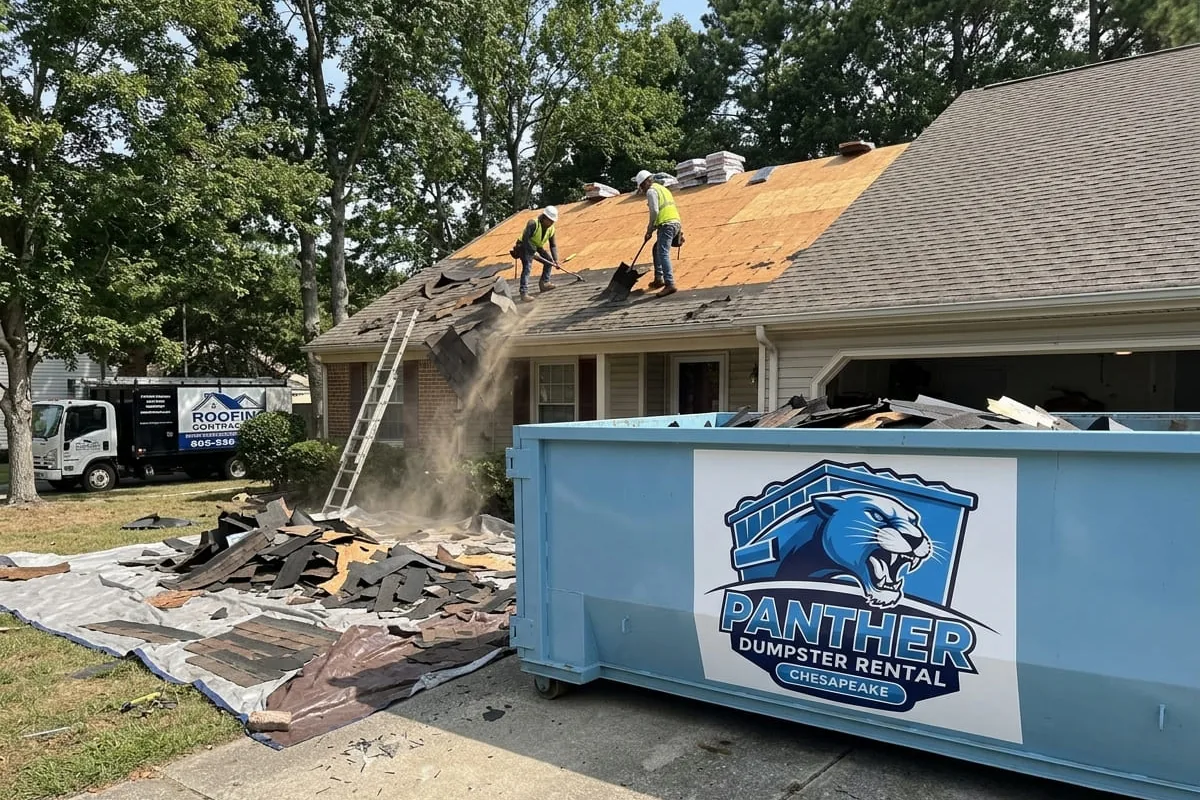
| Roofing shingles and tear-off | Re-roof | 10 or 15 yard, low-fill |
| Mixed strip-out (drywall, cabinetry, trim) | Demo / interior strip-out | 20 yard |
| Framing lumber, sheathing, packaging | Framing | 20 or 30 yard |
| Drywall and joint compound scrap | Drywall / mud | 20 yard |
| Full renovation mixed light debris | Whole-house remodel | 30 yard |
| Commercial fit-out, warehouse clear-out | Tenant build-out | 40 yard (light material only) |
This is the single biggest lever contractors have on disposal cost and turnaround, and it is also the one most often ignored until a hauler flags an overweight load. Concrete, brick, block, and dirt are dense enough that a small volume weighs as much as a full container of framing scrap. Put concrete or dirt in a 30 yard box alongside general demo debris and you will hit the weight ceiling long before the container looks full — paying for capacity you never used, or worse, a container that cannot legally be hauled until some of it is pulled back out.
The fix is straightforward: order a dedicated low-fill container, almost always a 10 yard, specifically for the dense stuff — concrete flatwork, block foundation removal, brick, tile, asphalt millings, or excavated dirt. That box gets loaded flat, low, and only with heavy material. Everything else — framing, drywall, packaging, cabinetry, flooring — goes in the general container. Crews that keep a heavy box on site from the start avoid the scramble of figuring out mid-demo where the block wall debris is supposed to go.
If you are not sure which category a load falls into, call before the demo crew starts — resizing on paper is easy, resizing a load already mixed is not.
A container that sits full while a crew keeps working is a stalled crew, not a minor inconvenience. On an active Chesapeake jobsite with subs rotating through on a tight sequence, the swap-out schedule has to be planned around the work, not treated as an afterthought once a box is overflowing.
The pattern that works best on multi-week jobs is a standing swap cadence tied to the phase, not a fixed calendar interval. Demo generates debris fast and often needs a swap within days; framing and finish generate it more slowly and can run one container longer. Rather than guessing, we ask contractors to flag the container as it approaches three-quarters full and schedule the swap before the crew needs the space, not after. On jobs with predictable volume — a framing crew filling a 30 yard roughly every week — a standing weekly swap on a set day removes the guesswork and lets the super plan around it.
A few things make swap-outs go faster and keep the schedule intact:
General contractors running several jobs at once across Chesapeake, Portsmouth, Suffolk, and Virginia Beach do not want to place a separate call for every container. The accounts that run smoothly are set up once, with a standing arrangement covering all active sites, then managed by exception — new site added, size changed, swap frequency adjusted — rather than renegotiated every time.
What that setup typically includes:
Property managers overseeing renovation work across multiple rental units or commercial spaces benefit from the same setup — one relationship covering several addresses, each container sized to the work actually happening there.
Where a container lands matters as much as what size it is — worth thinking through before delivery rather than after a driveway gets scarred or a sub's equipment is boxed in.
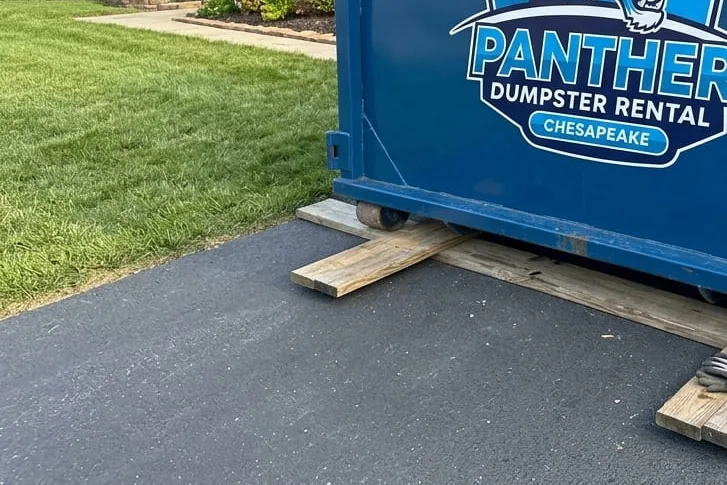
A loaded 20 or 30 yard container is heavy, and the delivery truck adds significant point-loading when it sets down or lifts a full box. On asphalt driveways, especially in summer heat, that combination can leave depressions or cracking. Plywood or purpose-made protection boards under the contact points reduce that risk and cost far less than driveway repair. On new construction with no finished driveway yet, this matters less — but on a renovation where the driveway needs to survive the project, it is worth the extra step.
On a jobsite with excavators, deliveries, and multiple trades in and out, a poorly placed container becomes an obstacle everyone navigates around. Placement should account for the truck's swing radius on delivery and pickup, clearance for other equipment sharing the access point, and enough distance from the work area that debris does not have to cross an active excavation or framing zone. On tighter urban lots in Chesapeake and Portsmouth, this sometimes means the container sits further from the building than convenient — a fair trade-off against blocking a crane or pump truck's setup position.
Placing a container entirely on private property — a driveway, a parking lot, or the job lot itself — does not require a permit. If the site has no room and the container has to sit on a public street or sidewalk, that generally requires a temporary placement permit from the City of Chesapeake. Sort this out during planning on a tight urban lot, not on delivery morning, since the alternative is a truck circling with nowhere to drop the box.
Most construction and demolition debris collected in this area is processed through the regional system operated by the Southeastern Public Service Authority, with the Chesapeake Transfer Station at 901 Hollowell Lane serving as a primary regional drop point. Keeping heavy debris separated at the source is not just a weight-and-cost issue on your end — it is also what allows clean concrete and masonry to be processed and reused rather than landfilled. A mixed load with concrete buried in framing scrap cannot be sorted for that purpose after the fact.
The contractors who spend the least time thinking about their dumpster mid-project are the ones who planned it before the first sub showed up: right size for the phase, a dedicated heavy box for anything dense, a swap schedule matching the pace of the work, and a placement that keeps trucks and crews out of each other's way. If you are running a job in Chesapeake, Portsmouth, Suffolk, or Virginia Beach and want help mapping container sizes to your schedule, call our yard.
Talk to a real person
Call and describe the job. Flat price, stated tonnage, and a delivery time on the same call.
Mon–Sat 7:00am – 6:00pm · Sun by appointment
From this guide
It depends on the phase, not the job as a whole. Demo and strip-out usually calls for a 20 yard, with a separate 10 yard low-fill box if the demo includes tile, block, or concrete. Framing volume often justifies a 30 yard, while drywall and finish work typically run fine on a 20 yard. If you only want one container for a full renovation, a 30 yard is the closest single-size compromise, but expect to manage heavy debris separately regardless of overall size.
You can, but it is a costly mistake. Concrete, brick, block, and dirt are dense enough that even a small amount can push a container's weight limit long before it looks full, and mixed loads cannot be sorted for recycling the way clean concrete can. Order a dedicated low-fill 10 yard for anything dense and keep it separate from the general construction waste container.
Not if it sits entirely on private property — the job lot, a driveway, or a parking area. If there is no room on site and the container has to go on a public street or sidewalk, a temporary placement permit from the City of Chesapeake is generally required. Sort this out during planning on tight urban lots rather than on delivery day.
Base it on the phase, not a fixed calendar. Demo generates debris fast and may need a swap within days; framing and finish phases usually fill a container more slowly. On jobs with predictable weekly volume, a standing swap on a set day removes the guesswork. Flag a container once it hits about three-quarters full so the swap can be scheduled before it stalls the crew, not after.
Yes. GCs and property managers running jobs across Chesapeake, Portsmouth, Suffolk, and Virginia Beach can set up a standing multi-site account with consolidated invoicing, default container sizes per site type, and authority for on-site supervisors to call in swaps directly, rather than renegotiating terms for every individual job.
Keep reading
A calm, room-by-room guide to clearing a loved one's Chesapeake home — what to keep, donate, and haul away, at a pace that actually works.
ReadA practical sizing guide for roofing tear-off dumpsters in Chesapeake, VA, covering squares, layers, weight limits, and storm-season timing.
ReadA loaded dumpster can dent asphalt or crack a stressed slab in hours. Here's what actually causes driveway damage and how to prevent it.
Read