Dumpster Permit Rules in Chesapeake, VA Explained
Most driveway dumpster rentals in Chesapeake need no permit at all. Here's exactly when the City of Chesapeake does require one, and how the process works.
ReadChesapeake, VA guide
A straight answer on what belongs in your roll-off and what doesn't, plus where Chesapeake-area homeowners take the stuff that isn't allowed.
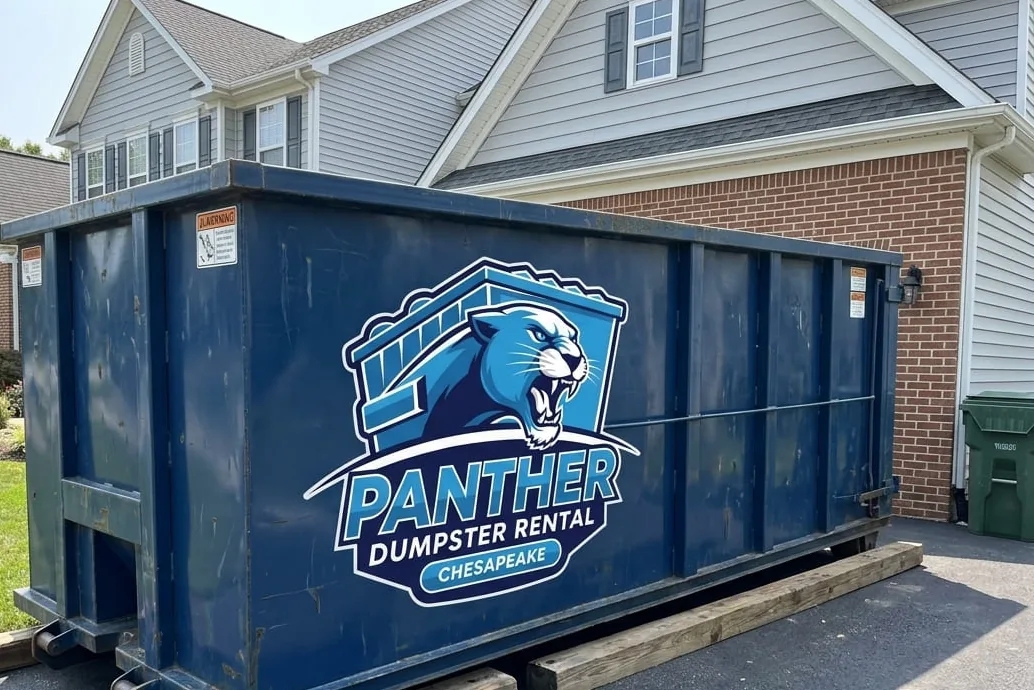
Every week our dispatch line gets some version of the same question: "Can I just throw this in the dumpster?" Usually the answer is yes. Sometimes it's a hard no, and the reason isn't us being difficult about it — certain materials get a load rejected at the transfer station, put our driver at risk on the highway, or run us into Virginia environmental law. Here's the real breakdown, from a crew that hauls roll-offs across Chesapeake, Portsmouth, Suffolk, and Virginia Beach every day.
It helps to understand the trip your dumpster takes before you load it. When we pick up a full container, it doesn't go straight to a landfill. Most loads from our yard head to a transfer station — in this region, the Chesapeake Transfer Station on Hollowell Lane, run by the Southeastern Public Service Authority (SPSA). From there, waste gets sorted, compacted, and trucked to a regional landfill or a waste-to-energy facility. Every stop in that chain has its own rules about what it can legally accept.
That matters because the restrictions on what can go in a dumpster aren't arbitrary. They come from three overlapping concerns: transport safety (what happens if a propane tank ruptures inside a compactor truck), landfill permitting (facilities are only licensed to accept certain waste streams), and environmental risk (what leaches into groundwater or gets released into the air when the wrong material is buried or burned). Knowing the "why" behind each rule makes it a lot easier to remember which bin something belongs in.
The allowed list covers the overwhelming majority of what actually comes out of a renovation, cleanout, or yard project. On a standard construction and demolition (C&D) or household debris load, you're fine loading:
The prohibited list is shorter, but it's non-negotiable, and every item on it is banned for a specific, practical reason:
Wet, unhardened paint, paint thinner, mineral spirits, and used motor or cooking oil are household hazardous waste. Landfills and transfer stations aren't permitted to accept liquid hazardous waste because it contaminates the waste stream, can leach into groundwater, and creates fire risk during compaction. Dried, hardened latex paint (crack the lid and let it solidify) is generally fine in a dumpster — it's the liquid form that's the problem.
Tires don't belong in a roll-off at all. They trap methane gas and tend to "float" up through landfill cells over time, exactly the kind of long-term problem landfill operators are permitted specifically to avoid. Tires need their own recycling route through a tire retailer or a dedicated collection event, not the dumpster.
Lead-acid automotive batteries and lithium-ion batteries are both banned. Lead-acid batteries contain corrosive acid and heavy metals; lithium-ion batteries (the kind in power tools, laptops, and e-bikes) are a documented and growing cause of fires at transfer stations and recycling facilities when they get crushed or punctured. Auto parts stores take lead-acid batteries for free, and most hardware and electronics retailers have lithium battery drop bins.
Pesticides, herbicides, pool chemicals, and anything labeled corrosive, reactive, or toxic fall under the same rule as paint and solvents — landfills aren't licensed to accept them, and mixing them into general waste creates real risk for the workers who handle the load downstream.
Any pressurized cylinder, from a small propane bottle to a full tank, is an explosion risk if it gets crushed in a compactor truck or landfill compactor. This one is treated as seriously as anything on the list. Propane retailers and exchange programs handle these safely.
Refrigerators, freezers, window AC units, and mini-splits all contain refrigerant, and federal EPA rules (Section 608 of the Clean Air Act) require it to be professionally recovered before the appliance can be scrapped or landfilled. We can often still take these — just tell us in advance so we can confirm the unit has been evacuated, or arrange for a certified technician to do it first.
Needles, sharps, and anything biohazardous can't go in a general dumpster under any circumstance. Sanitation and transfer station workers handle these loads by hand, and medical waste creates a direct injury and infection risk. Pharmacies and local health programs offer sharps disposal.
Small electronics are often fine in a general debris load, but some transfer stations restrict certain items — older CRT monitors and TVs in particular, which contain leaded glass. Rules vary by facility and can change, so ask us before loading large quantities of electronics.
| Category | Status | Why |
|---|---|---|
| Wood, lumber, pallets | Allowed | Standard C&D debris, no special handling |
| Drywall and plaster | Allowed | Standard C&D debris; heavy when wet |
| Tile, flooring, carpet | Allowed | Standard demo debris |
| Furniture and mattresses | Allowed | No statewide restriction in Virginia |
| Branches and yard debris | Allowed | Routine landscaping and storm waste |
| Soil and fill dirt | Allowed | Accepted, but very dense — watch weight limits |
| Roofing shingles | Allowed | Accepted, but heavy — size the container for it |
| Small appliances (no refrigerant) | Allowed | Standard scrap and debris |
| Paint, solvents, motor oil (liquid) | Prohibited | Hazardous waste; landfills not permitted to accept it |
| Tires | Prohibited | Traps methane, floats in landfill cells; state accumulation law |
| Batteries (lead-acid or lithium) | Prohibited | Corrosive materials and fire risk during handling |
| Pesticides and hazardous chemicals | Prohibited | Toxic or reactive; not landfill-permitted |
| Propane tanks and gas cylinders | Prohibited | Explosion risk in compactor equipment |
| Refrigerators, freezers, AC units (not evacuated) | Prohibited | Federal refrigerant recovery rule (EPA Section 608) |
| Medical waste and sharps | Prohibited | Biohazard and injury risk to handlers |
| CRT monitors/TVs and some electronics | Restricted — ask first | Facility-specific e-waste rules |
Tires deserve a closer look, because Virginia doesn't just discourage dumping them — it has a real statute behind it. Code of Virginia § 10.1-1418.2 makes it illegal to store or accumulate more than 100 waste tires on a property without a permit, with narrow exemptions for licensed salvage yards, agricultural operations, and recycling centers. This is a property-accumulation law, not a per-load disposal limit — but the state enforces it with real teeth. A knowing violation is a Class 1 misdemeanor, and 500 or more tires escalates to a Class 6 felony. The takeaway: tires need their own recycling route, not the dumpster, and Virginia genuinely prosecutes illegal tire dumping.
Batteries don't carry the same statutory weight, but the fire risk is well documented — a punctured lithium-ion battery in a load of compacted debris is a common cause of facility fires. Treat both categories the same way: set them aside, and use the free take-back programs retailers already offer.
Knowing what's prohibited only helps if you know where it goes instead. For anyone in Chesapeake, Portsmouth, Suffolk, or Virginia Beach, the SPSA-operated Chesapeake Transfer Station at 901 Hollowell Lane, Chesapeake, VA 23320 is the right first call. Beyond general municipal solid waste, it runs a household hazardous waste collection program and a separate used-motor-oil drop-off — the correct destination for paint, solvents, pool chemicals, and old motor oil, not your roll-off. Call ahead or check SPSA's posted hours, since hazardous waste collection is often limited to specific days. Tires go back through the retailer that sells or installs them, and batteries go to auto parts stores or big-box retailer battery bins, both free of charge.
The two categories that generate the most confusion are refrigerant appliances and electronics, because the rule depends on a step that happens before pickup rather than the item itself. Refrigerators, freezers, window units, and mini-splits aren't banned outright — they're banned until the refrigerant has been professionally recovered, a federal requirement, not a local preference. Tell us when you book if you're clearing a kitchen or replacing HVAC equipment; the unit may already be evacuated, and if not, we can point you to someone who can do it quickly.
Electronics are more of a moving target because facilities set their own limits, particularly around CRT monitors and televisions, which contain leaded glass some transfer stations won't take. A handful of laptops or small electronics in a general debris load is rarely an issue; a pallet of old office monitors is worth a phone call first.
A few habits keep every load moving smoothly and keep everyone on your site safe:
If prohibited material does turn up in a load once it reaches the transfer station, it typically gets flagged and sorted out, which can trigger extra handling charges or delays — easy to avoid with a few minutes of planning before the container is dropped off. When in doubt, call us before you load it. We'd rather answer the question up front than sort it out at the scale house.
Talk to a real person
Call and describe the job. Flat price, stated tonnage, and a delivery time on the same call.
Mon–Sat 7:00am – 6:00pm · Sun by appointment
From this guide
Yes. Virginia does not have a statewide mattress-recycling law or disposal fee, so a mattress can go into a standard dumpster load along with other furniture, unless the specific facility receiving that particular load tells us otherwise. If you're unsure, ask when you book and we'll confirm for your job site's destination.
Tell us as soon as you notice, before pickup if possible. If a prohibited item like a propane tank, battery, or can of paint makes it into the load, it typically gets caught and sorted out at the transfer station, which can add handling charges or delay the load. Catching it on your end first is always faster and cheaper.
Yes, torn-off shingles are one of the most common loads we haul. The catch is weight, not legality — shingles are dense, so a full tear-off can max out a container's weight allowance well before it looks full. Tell us the roof size when you book so we can size the dumpster correctly.
None — tires should not go in a dumpster at all, regardless of quantity. Virginia law (Code of Virginia Section 10.1-1418.2) separately makes it illegal to store more than 100 waste tires on a property without a permit, and the state actively enforces against illegal tire accumulation and dumping. Tires need to go back through a tire retailer or a dedicated recycling program.
Yes. Drain any gasoline or oil from small engines — mowers, generators, trimmers — before loading them. The metal frame and deck are fine for the dumpster once they're empty; the liquid fuel and oil are hazardous waste and need to go to the household hazardous waste collection at the Chesapeake Transfer Station instead.
Keep reading
Most driveway dumpster rentals in Chesapeake need no permit at all. Here's exactly when the City of Chesapeake does require one, and how the process works.
ReadA Hampton Roads dumpster crew's guide to sizing, staging, and timing a storm cleanup container before or after a Chesapeake hurricane.
ReadA phase-by-phase dumpster sizing guide for Chesapeake builders: heavy debris separation, swap-out scheduling, and jobsite placement.
Read