Chesapeake, VA Recycling & Disposal Guide | Panther
A practical, no-filler guide to how recycling and disposal actually work in Chesapeake, VA, including what a dumpster can and can't take.
ReadChesapeake, VA guide
Downsizing, decluttering, or prepping to sell? Here's a room-by-room Chesapeake cleanout checklist, plus how to size the dumpster right the first time.
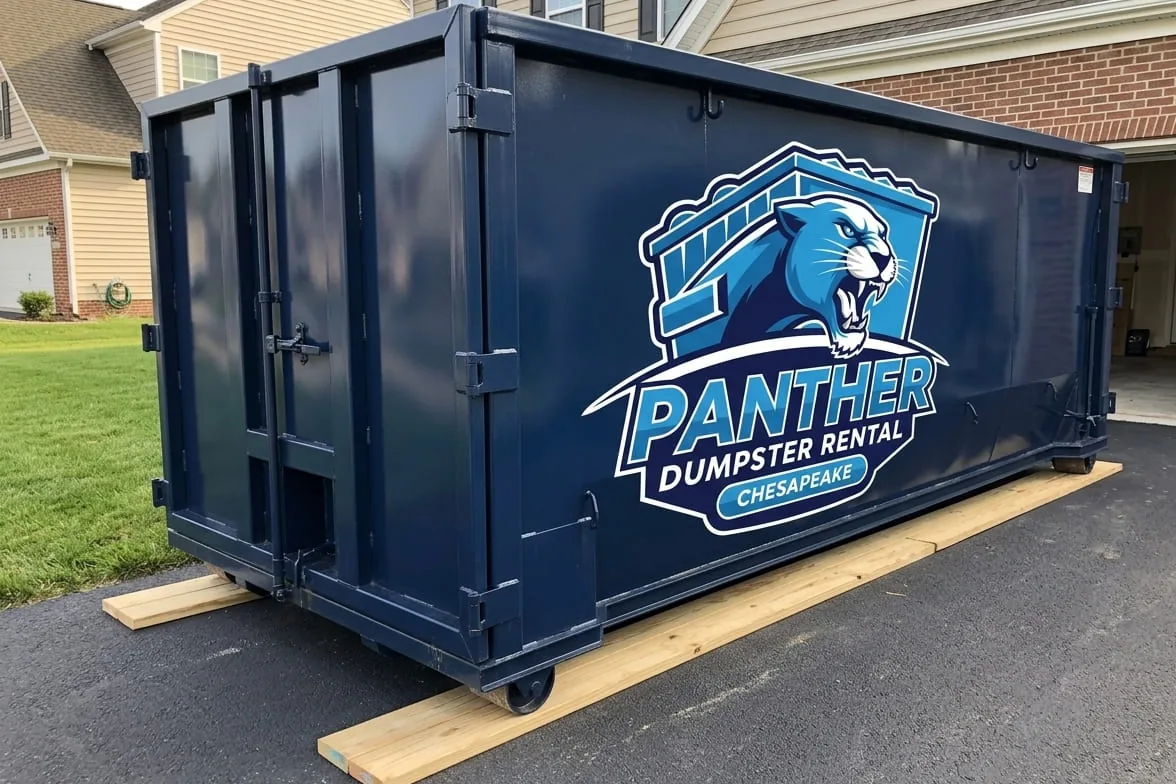
Every spring and every listing season, Chesapeake homeowners hit the same wall: the house looks fine on the surface, but the attic, garage, and closets are quietly stuffed with two decades of accumulation. Whether you're getting a home ready to list, downsizing into something smaller, or just tired of tripping over boxes in the garage, a whole-home cleanout is one of those projects that sounds bigger than it actually is once you break it into rooms and give yourself somewhere to put the junk. This is the checklist we hand customers who call us asking, "Where do I even start?"
The short version: work room by room, sort as you go instead of piling everything in the driveway first, and order the dumpster a size bigger than your gut tells you. Almost nobody underestimates how much stuff is in their house — they overestimate how much of it they'll actually keep.
Here's a detail that surprises people who move to Chesapeake from other parts of the country: fewer than 1 in 100 homes here have a basement. The water table along the Elizabeth River and the Southern Branch is high enough that basements are impractical for most of the city, so builders skip them almost entirely. That changes where your clutter lives. In a lot of the country, decades of stuff funnel into the basement. In Chesapeake, it funnels into the attic, the garage, hall and bedroom closets, and — for anyone on a larger lot in Hickory, Deep Creek, or Great Bridge — the shed or detached outbuilding. If you're planning your cleanout around "basement first," recalibrate. Attic and garage first is the Chesapeake version.
Trying to tackle a whole house at once is how cleanouts stall out. Instead, work through it as a series of smaller, finishable projects. Here's the order that works best for most homes, and what to expect in each space.
Almost always the single biggest contributor to a Chesapeake cleanout. Old paint cans, half-used bags of concrete, broken lawn equipment, bikes nobody rides, a workbench of hardware nobody can identify anymore. Pull everything out onto the driveway if weather allows — you cannot sort a garage from inside a garage. Group into keep, donate, sell, and trash piles before anything goes back in.
Since it's doing basement duty in most Chesapeake homes, expect old furniture, holiday decorations multiplied well past what you'll ever use, boxes from the last move that were never unpacked, and insulation-adjacent grime on everything. Watch the heat — attics in a Hampton Roads summer are brutal by mid-morning, so plan attic work for early morning or a cooler fall weekend.
Go closet by closet, not "all closets at once." Clothes, linens, shoes, and the mystery boxes on the top shelf add up fast, and closets are where the donate pile usually grows the most — wearable clothing and usable linens are exactly what local donation centers want.
Expired pantry items, duplicate small appliances, chipped dishware, and the drawer of takeout containers with no matching lids. Kitchens generate less bulk volume than garages or attics but a surprising amount of straight-to-trash weight.
Outgrown toys, broken plastic play equipment, old car seats and strollers, art supplies dried out years ago. This is a good one to do with the kids if ages allow — donating outgrown toys to a sibling, cousin, or donation center is an easy win emotionally, and it moves faster with buy-in instead of a fight over every item.
If you've got a shed, detached garage, or workshop, treat it like a mini version of the garage cleanout: tools, lawn equipment, half-empty chemical containers, and the stuff that got moved out there specifically to be forgotten about.
Four piles, decided in the moment, no "maybe" pile. A maybe pile just becomes a fifth room you have to clean out later.
The mistake most people make is trying to make the sell/donate call on every single item as they touch it. Faster method: anything you're not certain about goes straight to donate. Donation centers can move volume you'd spend a week trying to sell piece by piece, and the goal of a whole-home cleanout is to finish it, not to run a six-week garage sale.
This is the number people get wrong almost every time — and they get it wrong low. A house that "doesn't look that cluttered" from the living room routinely produces two to three times the volume homeowners expect once the garage, attic, and closets are actually emptied out. Here's a realistic breakdown by area for an average Chesapeake single-family home.
| Area | Typical Volume Generated | Common Surprises |
|---|---|---|
| Garage | 4-8 cubic yards | Old paint, oil, and chemicals that need hazardous drop-off, not the dumpster |
| Attic | 3-6 cubic yards | Water-damaged boxes, old insulation debris, forgotten furniture |
| Closets (whole house) | 2-4 cubic yards | Vacuum-sealed bags that look small but expand once opened |
| Kitchen | 1-2 cubic yards | Heavier than expected — dishware and canned goods add real weight fast |
| Kids' rooms / playroom | 2-3 cubic yards | Bulky plastic toys that take up far more space than their weight suggests |
| Shed / outbuilding | 2-5 cubic yards | Rusted equipment and lawn chemicals that count as household hazardous waste |
Add that up across an average home and you're commonly at 15-25 cubic yards once everything's out of the house — well above what most people picture before they start.
Because Chesapeake homes push most of their storage into attics, garages, and sheds instead of a basement, whole-home cleanouts here tend to run a little heavier on bulky, awkward volume — old furniture, plastic totes, lawn equipment — than on dense debris. That affects sizing more than people expect.
When in doubt, size up. A half-full 20-yard dumpster costs you nothing extra in frustration. A full 15-yard dumpster halfway through the garage means a second rental, a second delivery fee, and a delay you didn't plan for.
Timing the dumpster wrong is one of the most common — and most avoidable — cleanout mistakes we see.
If you're selling: Book the dumpster before the listing photos, not after. Buyers and their agents notice a cluttered garage and an overstuffed attic, even if those spaces don't technically count toward square footage. Plan for the dumpster to be on-site 5-7 days before your photographer or stager arrives, giving you a buffer for the inevitable "one more load" days.
If you're moving: Do the cleanout before the movers give their final quote if at all possible — a lighter, decluttered move is a cheaper, faster one, and you're not paying to relocate things you were going to get rid of anyway. Schedule the dumpster for the two weekends before your move date rather than the week of, so packing and cleanout don't compete for the same days.
If you're downsizing in place: There's no external deadline pushing you, which is exactly why it's worth setting one anyway. Pick a target date, book the dumpster for that week, and work backward through the room list above.
Getting this sorted correctly up front saves you from digging items back out of a full dumpster later.
One more category worth a mention: electronics like old TVs, computers, and monitors often have separate handling requirements too. When in doubt about a specific item, a quick call to us before you toss it saves everyone a headache — we'd rather answer the question than have it come back on the pickup.
A few habits separate a cleanout that finishes on schedule from one that drags into a third weekend. Sort as items come out of the room, not after they're already piled in the yard. Load the dumpster with bulky, awkward items first — furniture, appliances, big plastic totes — then fill gaps with smaller debris, rather than tossing loosely and wasting space. Break down boxes and disassemble furniture where you can; flat pieces stack far more efficiently than intact frames. And keep the donate and sell piles physically separate from day one, ideally in the car or garage bay, so they don't accidentally end up in the dumpster during a tired end-of-day sweep.
A whole-home cleanout is genuinely one of the most satisfying projects a homeowner can knock out in a weekend or two. Break it into rooms, sort honestly as you go, size the dumpster generously, and you'll be surprised how much lighter the house feels by Sunday night.
Talk to a real person
Call and describe the job. Flat price, stated tonnage, and a delivery time on the same call.
Mon–Sat 7:00am – 6:00pm · Sun by appointment
From this guide
Most whole-home cleanouts run comfortably over a weekend to about a week, and rental periods are flexible enough to match that. If your project stretches longer — say you're doing the garage one weekend and the attic the next — just let us know when you book so we can plan the right rental window instead of a rush pickup.
A dumpster placed entirely on your own driveway or property typically doesn't require a permit. If there's no room on-site and the dumpster needs to sit on the street or public right-of-way, check with the City of Chesapeake first, since street placement is handled differently than driveway placement.
For a true whole-home cleanout, a 20-yard dumpster is the most common fit and the safest default if you're not sure. Smaller homes or single-area projects like a garage-and-closets cleanout often do fine with a 15-yard, while larger homes or properties with a shed or detached garage usually do better with a 30-yard.
No — household hazardous items like paint, automotive fluids, pesticides, batteries, and propane tanks can't go in a rental dumpster. In Chesapeake, take these to the Chesapeake Transfer Station's household hazardous waste collection at 901 Hollowell Lane, operated by SPSA.
Set it aside for donation rather than the dumpster. Usable furniture, wearable clothing, working small appliances, and gently used toys and books are exactly what local donation centers can put back into use, and pulling them out first also frees up dumpster space for the items that genuinely have nowhere else to go.
Keep reading
A practical, no-filler guide to how recycling and disposal actually work in Chesapeake, VA, including what a dumpster can and can't take.
ReadWeight and volume aren't the same limit. Here's how to size a roll-off correctly for your material, plus real driveway access numbers for Chesapeake.
ReadFlat-rate dumpster pricing in Chesapeake isn't one number for every job. Here's what's actually built into that price, and what pushes it up.
Read